

Adolescent therapy is defined as professional mental health counseling tailored specifically to the emotional, behavioral, and psychological challenges teenagers face during their developmental years. Unlike general counseling, it accounts for the unique pressures of adolescence: identity formation, peer relationships, academic stress, and the push and pull between independence and family. Evidence-based counseling for teens can improve mood disorder outcomes by up to 72% compared to no treatment. That number tells you something important: getting your teen into the right support early is not a small decision. This guide covers what is adolescent therapy explained in plain terms, what the process looks like, and how you can support your teen every step of the way.
What is adolescent therapy explained for parents?
Adolescent therapy, also called teen counseling or youth mental health counseling, is a structured process where a trained therapist works one-on-one, or sometimes in groups, with teenagers aged roughly 12–18. The goal is to help them develop emotional regulation, self-awareness, and coping skills suited to their stage of life. This is not adult therapy with a younger client. The methods, language, and pacing are all adapted to how teenagers think and process experience.
The need is real and growing. Mental health challenges among young people have increased significantly in recent years, making early intervention more important than ever. Therapy gives teens a private, steady space to work through what they are carrying, before those struggles grow into crises. At Prism-counseling, this process is further shaped by a faith-integrated approach that honors both the emotional and spiritual dimensions of a teenager's life.
Common issues addressed in adolescent therapy include anxiety, depression, low self-esteem, grief, trauma, family conflict, and social difficulties. Therapy does not require a diagnosis to be useful. Many teens benefit simply from having a consistent, confidential relationship with a skilled adult who is not their parent or teacher.

How does adolescent therapy work?
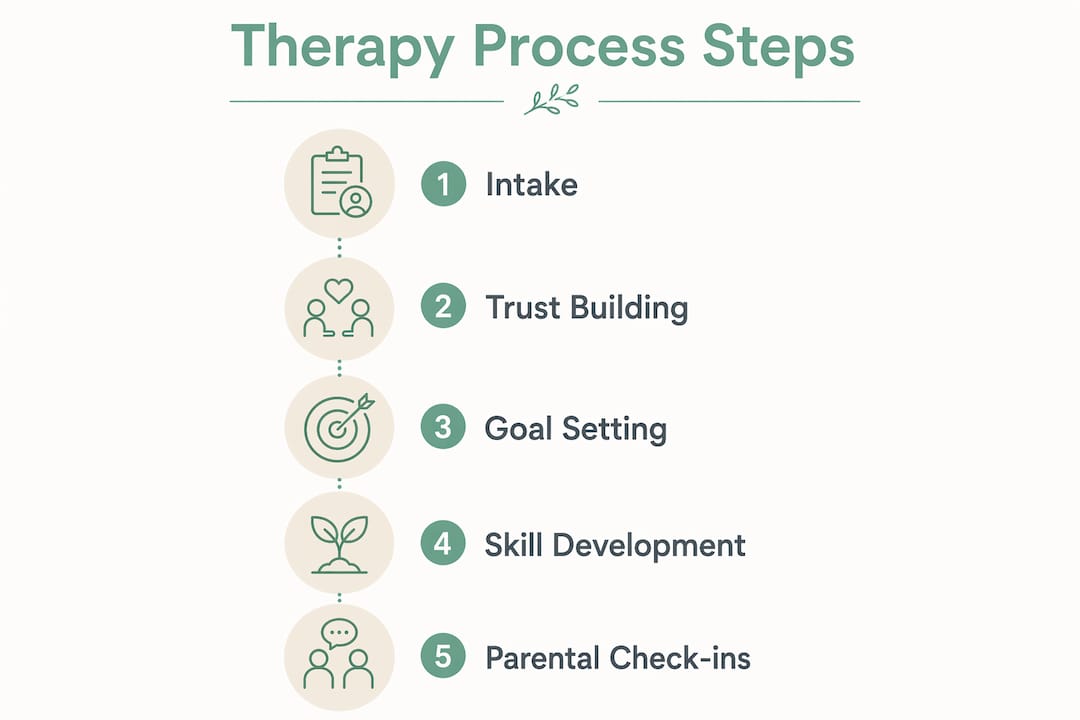
Adolescent therapy begins with an intake that involves both the teen and the parents. This first meeting gathers background information, identifies the presenting concerns, and sets initial goals. After intake, the therapist typically meets with the teen individually for weekly sessions lasting 45–50 minutes.
The early sessions do not jump straight into problem-solving. Initial sessions focus on building safety and trust rather than immediate behavioral change. This phase is especially important for reluctant teens. Pushing for breakthroughs too soon often triggers resistance. Patience in these early weeks is not wasted time. It is the foundation everything else is built on.
Confidentiality is a core part of the process. Your teen needs to know that what they share stays private. That said, therapists must break confidentiality if a teen poses an immediate safety risk, including self-harm, suicidal ideation, or threats toward others. Parents should understand this boundary clearly from the start. It protects everyone.
Most therapists schedule periodic check-ins with parents to share general progress without disclosing session content. This keeps you informed while preserving your teen's sense of privacy and autonomy. Telehealth options are also widely available and often improve attendance, particularly for teens with busy schedules or transportation barriers. Prism-counseling offers online counseling sessions for families who need that flexibility.
Pro Tip: Ask the therapist during intake how they structure parent communication. A clear agreement upfront prevents misunderstandings later and helps your teen feel secure in the process.
What are the common types of teen therapy?
Several well-established approaches are used in adolescent mental health support. Each targets different needs, and many therapists blend more than one method.
Cognitive Behavioral Therapy (CBT) is the most widely used approach for teens. It teaches young people to identify distorted thought patterns and replace them with more accurate, constructive ones. CBT adapted for teens reduces amygdala hyperactivity by 41% and increases self-concept clarity by 58%. Those are not abstract numbers. They reflect measurable changes in how a teenager's brain processes fear and how clearly they understand themselves.
Dialectical Behavior Therapy (DBT) was originally developed for adults with intense emotional dysregulation, but it has been adapted effectively for adolescents. DBT teaches four core skill sets: mindfulness, distress tolerance, emotional regulation, and interpersonal effectiveness. It is particularly useful for teens who struggle with self-harm, explosive anger, or unstable relationships.
Family therapy brings parents and sometimes siblings into the room. It addresses communication breakdowns, boundary issues, and relational patterns that contribute to a teen's distress. Family dynamics rarely stay neutral when a teenager is struggling. Addressing them directly often accelerates progress.
Group therapy offers something individual sessions cannot. Group formats normalize peer struggles and support a sense of belonging more effectively than one-on-one sessions in some cases. For adolescents, who are developmentally wired to care deeply about peer connection, this format can be especially powerful.
Expressive and trauma-focused therapies round out the picture. Teen therapy often includes art, games, or informal activities to lower defenses and match developmental levels. These are purposeful strategies, not distractions. For teens who have experienced trauma, approaches like EMDR (Eye Movement Desensitization and Reprocessing) address the root of distress rather than just its symptoms. Prism-counseling offers EMDR therapy as part of its trauma-informed care.
| Therapy type | Best suited for |
|---|---|
| CBT | Anxiety, depression, negative thought patterns |
| DBT | Emotional dysregulation, self-harm, impulsivity |
| Family therapy | Communication breakdowns, relational conflict |
| Group therapy | Social isolation, peer belonging, identity development |
| EMDR | Trauma, PTSD, unresolved distressing memories |
Pro Tip: No single modality works for every teen. A good therapist will adjust their approach based on your teen's personality, presenting issues, and how they respond over time.
What are the benefits of adolescent therapy?
The benefits of adolescent therapy extend well beyond symptom reduction. Teens who engage consistently with therapy develop stronger emotional regulation, clearer self-concept, and more effective conflict resolution skills. These gains carry forward into adulthood. Therapy during adolescence is not just crisis management. It is an investment in long-term resilience.
Evidence-based counseling improves mood disorder outcomes by up to 72% compared to no treatment. That figure applies to structured, consistent therapy. Sporadic or reluctant attendance produces far weaker results. Consistency matters more than the specific modality used.
Beyond mood, therapy builds practical skills. Teens learn to name and manage their emotions rather than act them out. They develop the ability to recognize when a situation is escalating and choose a different response. For parents, this often shows up as fewer explosive arguments at home and a teen who can articulate what they need rather than shutting down or lashing out.
Early intervention also prevents escalation. Therapy is most effective when used consistently before problems escalate into crises. Waiting until a teen is in acute distress limits what therapy can accomplish in the short term. Starting earlier, even with mild concerns, gives the process time to work. For teens navigating depression specifically, counseling for self-esteem can be a meaningful entry point.
How can parents support their teen through therapy?
Your role as a parent is significant, but it works best when it stays in the background. The most helpful thing you can do before therapy starts is frame it without pressure or judgment. Avoid language that implies your teen is broken or that therapy is a punishment. A simple, honest framing works well: "I want you to have someone in your corner who is just for you."
- Start the conversation early. Bring up therapy before a crisis forces the issue. Normalize it the way you would a physical checkup.
- Respect the confidentiality boundary. Avoid interrogating your teen after sessions. Ask open questions and let them share what they choose.
- Reinforce skills at home. If your teen's therapist shares general strategies, practice them in daily interactions. Consistency at home amplifies what happens in the therapy room.
- Manage your own expectations. Progress is rarely linear. Some weeks will feel like regression. That is a normal part of the process, not a sign that therapy is failing.
- Know when to escalate. If your teen's needs exceed what weekly outpatient therapy can address, Intensive Outpatient Programs (IOP) offer 9–12 hours of structured weekly support for higher-need cases. Ask the therapist directly if they feel a higher level of care is warranted.
Many families misconceive therapy as a last resort, but proactive use of therapy provides a private, steady space for teens and prevents crises. Shifting that mindset is one of the most important things a parent can do. For deeper reading on what your teen may be experiencing, Prism-counseling's resource on understanding your teen offers grounded, practical perspective.
Pro Tip: If your teen resists therapy, consider attending a session yourself first. Seeing that the therapist is approachable and not an authority figure can reduce a reluctant teen's anxiety about going.
Key Takeaways
Adolescent therapy works because it combines evidence-based techniques, consistent trust-building, and developmentally appropriate methods to address the emotional and behavioral challenges teenagers face before those challenges become crises.
| Point | Details |
|---|---|
| Early intervention matters | Starting therapy before problems escalate produces stronger, more lasting outcomes. |
| Trust precedes technique | The first sessions build safety, not solutions. Patience in this phase is not optional. |
| Modality should match the teen | CBT, DBT, family therapy, and EMDR each serve different needs. Good therapists adapt. |
| Parent involvement has limits | Supporting your teen means staying engaged without overriding their privacy or autonomy. |
| Consistency drives results | Evidence shows up to 72% improvement in mood disorders with structured, regular therapy. |
What I've learned about teen therapy after years of working with families
The most common mistake I see parents make is treating therapy as a destination rather than a process. They bring their teen in expecting a few sessions to produce a calmer, more communicative kid. When that does not happen by week four, they start to doubt whether it is working. What they are missing is that therapists serve as non-authoritative partners, not fixers. The therapist's job is to create conditions where the teen chooses to grow. That cannot be rushed.
The second thing I have observed is how much the parent's posture shapes the teen's experience. Teens are acutely sensitive to whether their parents are using therapy as a tool to change them or as a genuine act of care. When a parent says, "I want you to have support," and then actually steps back and lets the process unfold, teens respond. When a parent says the same words but then grills the teen after every session, the message received is very different.
Faith adds a dimension to this work that I find genuinely meaningful. Many teens carry spiritual questions alongside their emotional ones. Who am I? Does my life matter? Is there something beyond what I can see? A faith-integrated approach does not sidestep those questions. It holds them with the same care as the clinical work. That integration is what sets Prism-counseling's approach apart from conventional teen therapy.
My honest encouragement to any parent reading this: do not wait for a crisis. The teens who benefit most from therapy are not always the ones in the most visible pain. Sometimes they are the quietly struggling ones who have learned to hold it together on the outside. Reach out early. Give the process time. And trust that a skilled, caring therapist can become one of the most important relationships in your teenager's life.
— Tres
Adolescent therapy at Prism-counseling
Prism-counseling offers faith-integrated adolescent therapy for families in the Phoenix and Peoria, Arizona area, with both in-person and online options available. With over 14 years of experience, the practice provides personalized care that respects your teen's emotional needs and your family's spiritual values. The intake process involves both parents and teens, and the small, private-pay model means appointments are typically available within days, not weeks.

Whether your teen is navigating anxiety, depression, identity questions, or family conflict, Prism-counseling's counselors bring clinical skill and genuine compassion to every session. Explore faith-based counseling options or visit the Prism-counseling home page to learn more and take the first step toward support for your family.
FAQ
What is adolescent therapy and who is it for?
Adolescent therapy is professional mental health counseling designed for teenagers aged roughly 12–18. It addresses emotional, behavioral, and psychological challenges specific to the adolescent developmental stage.
How long does teen therapy usually take?
Sessions typically run 45–50 minutes and are held weekly. The overall duration depends on the teen's needs, but most families see meaningful progress within 8–16 sessions of consistent attendance.
What happens if my teen refuses to go to therapy?
Forced participation often triggers defensive barriers and reduces effectiveness. Start with a low-pressure conversation, consider attending an introductory session yourself, and give your teen some say in choosing their therapist.
Is what my teen says in therapy kept private?
Yes, confidentiality is fundamental to teen therapy. Therapists are legally required to break privacy only when a teen poses an immediate risk of harm to themselves or others, such as in cases of self-harm or suicidal ideation.
Does adolescent therapy work for depression and anxiety?
Evidence-based counseling for teenagers can improve mood disorder outcomes by up to 72% compared to no treatment. CBT and DBT are the most researched approaches for teen depression and anxiety.
Recommended
- Understanding Your Teen - Prism Counseling & Coaching | Faith-Based Counseling and Spiritually-Integrated Therapy in Peoria and Phoenix AZ
- What is Your Parenting Style? - Prism Counseling & Coaching | Faith-Based Counseling and Spiritually-Integrated Therapy in Peoria and Phoenix AZ
- Christian Counseling Resources | Articles, Videos, and Podcast Resources by Topic - Prism Counseling & Coaching | Faith-Based Counseling and Spiritually-Integrated Therapy in Peoria and Phoenix AZ
- Explore Counseling - Prism Counseling & Coaching | Faith-Based Counseling and Spiritually-Integrated Therapy in Peoria and Phoenix AZ