

Affirming Christian counseling is faith-integrated therapy that honors your sexual orientation or gender identity as part of who God made you, not a problem to fix. Prism Counseling & Coaching provides this care in the Phoenix area, drawing on more than 14 years of faith-based clinical work and a firm anti-conversion stance. It helps LGBTQ+ Christians, questioning teens, and families navigating church hurt. If that describes you, the next step is finding a licensed counselor who states their affirming position plainly, not vaguely.
TL;DR:
- Therapists must clearly state their affirming stance and avoid any belief that therapy aims to change a client's sexual orientation or gender identity.
- Expect trauma-informed care with flexible spiritual integration, including EMDR and narrative therapy, tailored to address religious harm and family trauma.
- Verify licensure and training in modalities like trauma-informed care, EMDR, or faith-integrated approaches, ensuring they prioritize client autonomy and informed consent.
- Use specialized directories and faith-organized lists to find counselors skilled in both LGBTQ+ affirming practices and religious sensitivity.
- The first session typically involves safety screening, history-taking, and collaborative goal setting, with clear boundaries on religious content based on your preferences.
Table of Contents
- What Affirming Christian Counseling Means in Practice
- Services Commonly Offered, From Individual Therapy to Ministry Burnout
- What Credentials and Safeguards Should You Look For?
- How Do You Find and Vet an Affirming Christian Counselor?
- What Happens in Your First Session?
- Prism Counseling & Coaching: An Example of Faith-Integrated, Affirming Practice
- A Counselor's Perspective on Religious Trauma and Reconciliation
- How Prism Counseling & Coaching Can Help You Move Forward
- Trusted Resources Worth Bookmarking
- Sources
What Affirming Christian Counseling Means in Practice
Affirming Christian counseling holds two truths together that many churches have insisted are incompatible: your faith and your identity. It means a counselor integrates scripture, prayer, or spiritual practice only when you invite it in, never as a lever to change who you love or how you understand your gender. The Trevor Project notes that the relationship between LGBTQ+ identity and religion is deeply personal, which is exactly why affirming care centers your autonomy instead of a predetermined outcome.
This approach rests on a few non-negotiables:
- No conversion goals. The counselor never frames a session's success as changing your orientation or gender identity.
- Informed consent up front. You know the therapeutic approach and the counselor's affirming stance before you share your story.
- Trauma-informed pacing. Sessions address religious wounds without forcing you to relive them before you're ready.
- Room for reconciliation. Whether that means healing a family relationship or making peace with a faith tradition, the goal is yours to define.
Pro Tip: Ask a prospective counselor directly, "What happens in your practice if a client's family wants me to change?" Their answer tells you everything about where they stand.
Services Commonly Offered, From Individual Therapy to Ministry Burnout
Affirming Christian counseling covers more ground than a single "LGBTQ+ therapy" label suggests. Most practices offer:
- Individual therapy for anxiety, depression, or identity integration.
- Couples and family therapy, including sessions that help parents stay connected to a child who has come out.
- Faith deconstruction support for people rebuilding belief after leaving a harmful church environment.
- Ministry burnout recovery for pastors and church staff carrying invisible exhaustion.
- EMDR for trauma, often used when religious harm shows up as flashbacks or body-based distress.
Virtual sessions widen access, especially valuable if local affirming counselors are scarce or if privacy at home or work matters more than convenience. In-person work can deepen rapport for some clients, but it requires a counselor licensed in your state. Costs vary by practice and modality; many affirming counselors run private-pay models with transparent flat fees, which often means faster openings than insurance-based scheduling allows.
What Credentials and Safeguards Should You Look For?
Licensure is not optional paperwork. It's the baseline that separates a trained clinician from someone offering advice with no accountability. Look for an LPC, LCSW, LMFT, or a PhD/PsyD in psychology, all of which require state licensing boards, supervised hours, and ongoing ethics oversight.
Modalities matter too. Affirming counselors commonly draw on:
- Trauma-informed care for religious or family-based harm.
- EMDR to process specific traumatic memories.
- CBT for anxiety and depression patterns.
- Narrative therapy to help you author a new story about your faith and identity.
- Spiritually-integrated approaches that weave in prayer or scripture only when you want them there.
Pew Research has found that roughly half of LGBT adults in the U.S. still identify with a religion, even as many report lower religious attendance and more distrust of religious institutions. That statistic matters clinically: it means most affirming clients aren't choosing between faith and identity, they're trying to hold both, and a counselor unprepared for that nuance will fall short. The strongest trust signal remains a written, explicit affirmation policy the counselor will show you before you book.
How Do You Find and Vet an Affirming Christian Counselor?
Start your search in places built for this exact intersection, not general therapy directories where "faith-friendly" can mean almost anything.
- Check denominational affirming lists from LGBTQ+ inclusive church networks and organizations like Q Christian Fellowship, which maintains community and theological resources for LGBTQ+ Christians.
- Search LGBTQ+ mental health directories that let counselors self-identify their approach and specialties.
- Review therapist directories filtered by state license and specialty tags like "affirming" or "LGBTQ+."
- Visit faith-integrated practice websites directly, where an explicit policy statement often appears on the counseling or LGBTQ+ services page.
Once you have names, call or email with direct questions: "Do you ever work toward changing a client's sexual orientation or gender identity?" "How do you include faith in sessions, and who decides when that happens?" "What are your fees, and do you offer sliding scale or private-pay only?"
Pro Tip: Write down the exact wording of their answer to the conversion question. Vague responses like "we meet clients where they are" without a clear no deserve follow-up, not benefit of the doubt.
Red flags include hedging on identity change, language implying your orientation is a "struggle" to overcome, or any suggestion that spiritual growth requires conformity to a specific outcome. If you sense pressure rather than partnership, keep looking.
What Happens in Your First Session?
Your first session functions like most clinical intakes: the counselor gathers history, screens for safety concerns, and asks what you want from therapy. Expect questions about your background, current stressors, and any past experiences with religious or conversion-focused counseling, since that history shapes how carefully the counselor paces future sessions.
Faith enters only at your invitation. If you want scripture, prayer, or discussion of specific spiritual practices woven into treatment, say so. A good counselor will ask rather than assume.
- Clear goals set collaboratively, not dictated
- Boundaries around religious content, decided by you
- A written or verbal consent process before any technique like EMDR begins
- An open door to request a referral or second opinion if the fit feels wrong
Progress often looks like reduced anxiety around your identity, restored family communication, or simply feeling safe enough to talk about faith again.
Prism Counseling & Coaching: An Example of Faith-Integrated, Affirming Practice
Prism Counseling & Coaching has offered faith-integrated therapy in the Phoenix area for more than 14 years, built around a small, private-pay model designed for privacy and individualized attention. That structure often means openings within days rather than the multi-week waits common with insurance-based scheduling.
The practice's approach to LGBTQ+ affirming counseling includes:
- EMDR and trauma-informed methods for clients carrying religious or family trauma
- Counseling for LGBTQ individuals that centers autonomy, not a change agenda
- First-hand perspective on conversion therapy harm, documented in a pastor and counselor's account of why affirming care matters
If you're ready to reach out, have your insurance status (or private-pay preference) and a short summary of what brought you to counseling ready when you contact the practice.
A Counselor's Perspective on Religious Trauma and Reconciliation

Religious trauma is real, and it doesn't behave like ordinary grief. It shows up as body tension in church buildings, distrust of anyone in spiritual authority, or grief for a community that no longer feels safe. Affirming clinicians increasingly recognize that healing requires more than reassurance. It requires substantive theological engagement when a client wants it, not just surface-level inclusive language.
Safety comes first. Autonomy comes second, always yours to keep. Theological conversation comes only when you ask for it, never as a prerequisite for care. That order matters more than most people realize until they've sat across from a counselor who got it backward.
— Tres
How Prism Counseling & Coaching Can Help You Move Forward
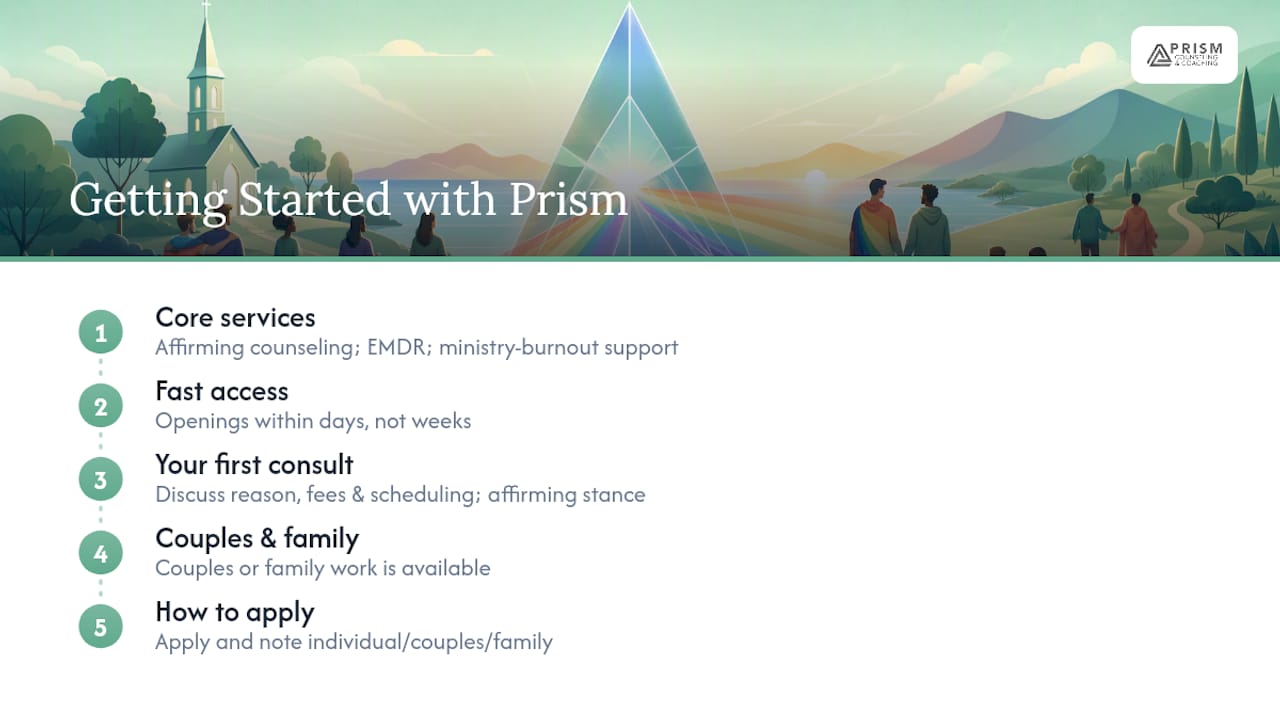
Prism Counseling & Coaching offers exactly the services this guide walks through: LGBTQ+ affirming counseling, EMDR for trauma, and support for ministry burnout, all without the multi-week waitlist typical of insurance-based clinics. Because the practice runs on a small, private-pay model, new clients often find openings within days rather than weeks.
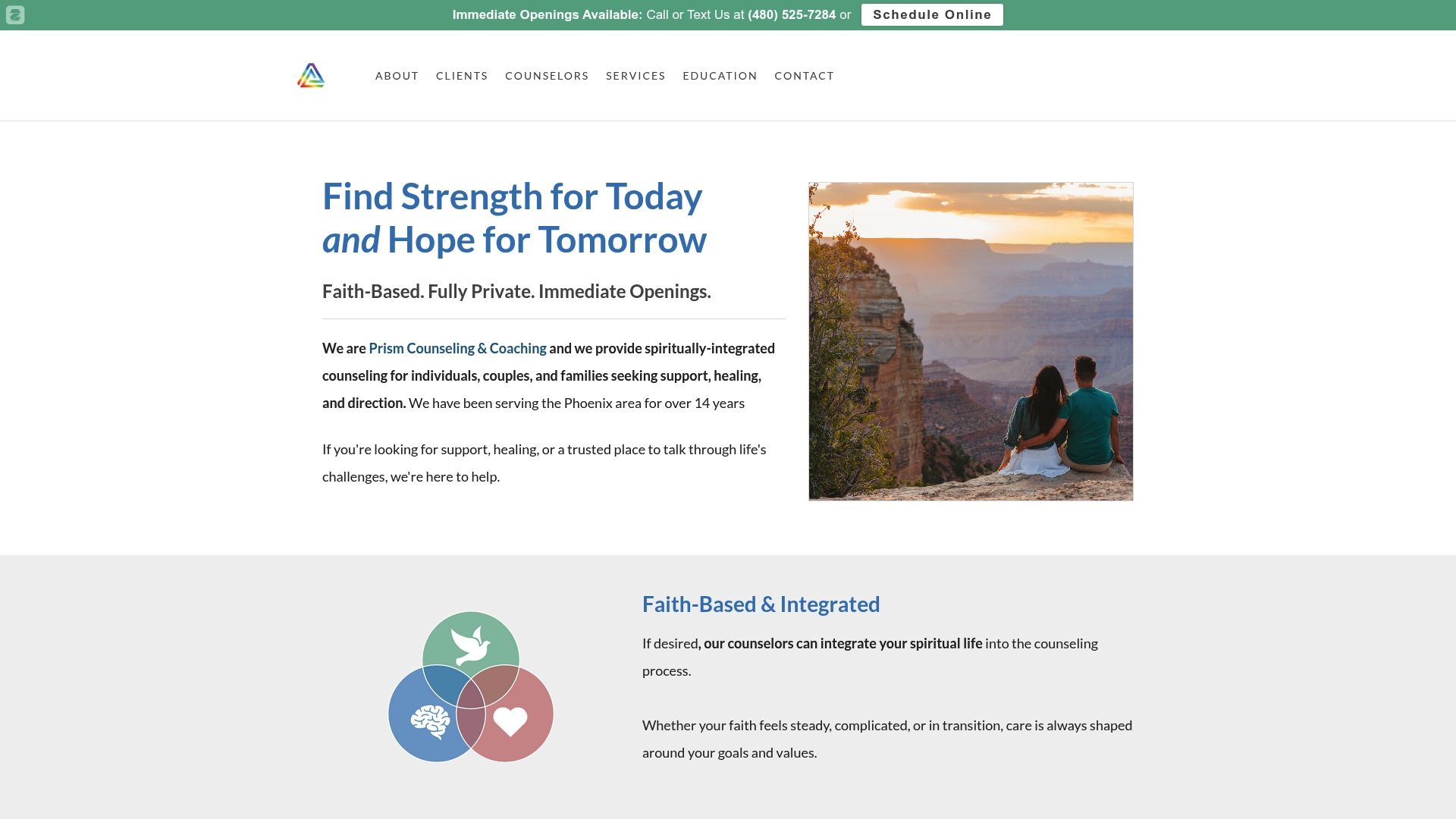
Your first consult is straightforward. Expect a conversation about what brought you in, a look at fees and scheduling, and a clear answer about the practice's affirming stance before you commit to anything. If couples or family work fits your situation better, that path exists too, and outside research on faith-based marriage counseling backs the value of keeping faith in the room during relationship repair.
Ready to take the next step? Apply for an opening and note whether you're seeking individual, couples, or family support so the intake team can match you appropriately.
Trusted Resources Worth Bookmarking
Beyond a single counselor, community and research matter for the long haul.
- Q Christian Fellowship hosts conferences and theology resources connecting LGBTQ+ Christians to spiritual community.
- The Trevor Project's guidance on faith and identity offers a grounded starting point for family members.
- Prism's counseling resource library collects articles and podcast episodes by topic.
Use these to double check any clinician's affirming claims before you book, and prioritize licensed professionals over informal advice.
This article is general information, not a substitute for advice from a qualified doctor. Consult a qualified healthcare professional about your own circumstances before acting on anything here.
Sources
- Navigating LGBTQ identities and religion | The Trevor Project
- How LGBTQ-affirming churches are confronting religious trauma | Religion News Service