

Christian counseling in Phoenix typically runs between $90 and $190 a session, depending on who you see and how you pay, according to local therapy cost data. Rates shift based on the counselor's credentials and whether you use insurance or pay out of pocket. Before you book, ask every provider for a written Good Faith Estimate or whether sliding-scale pricing is available. That one question can save you from an unexpected bill later.
TL;DR:
- Counselors with less experience or supervision, such as trainees, charge closer to $90 to $120, especially for telehealth or sliding-scale options.
- Specialized services like EMDR, trauma therapy, or couples counseling often cost between $165 and $190, due to additional training and focus areas.
- Insurance coverage typically reduces your cost to a $20 to $50 copay, but out-of-network providers require upfront payment with reimbursement options.
- Always request a written Good Faith Estimate before treatment and verify license credentials to avoid unexpected bills or billing issues.
- Lower-cost options such as university clinics, community health centers, and telehealth platforms exist, but may involve trade-offs like less experience or availability.
Table of Contents
- Typical Christian counseling costs in Phoenix by provider type
- What drives the price: credentials, specialty, format, and geography
- Insurance, in-network costs, and your Good Faith Estimate rights
- Lower-cost and sliding-scale options in Phoenix
- How to choose and compare Christian counselors in Phoenix
- Publisher perspective: what faith-integrated, private-pay care looks like
- How to book with Prism: rates, sliding scale, and next steps
- FAQ
- Sources
Typical Christian counseling costs in Phoenix by provider type
What you pay depends heavily on who sits across from you. A licensed professional counselor (LPC) or licensed clinical social worker (LCSW) in Phoenix often charges toward the lower to middle of the local range, while a psychologist with a PhD or PsyD tends to bill at the higher end. Telehealth sessions frequently cost less than in-person visits because providers carry lower overhead, and some counselors offer package pricing that lowers the per-session rate when you commit to a block of appointments.

Phoenix session rates commonly fall between $90 and $190, with telehealth sitting at the lower end and specialized clinicians at the higher end. That range gives you a benchmark when a provider quotes you a number over the phone.
Here is roughly what to expect when you call around:
- Lower band ($90 to $120): telehealth sessions, trainee or supervised clinicians, and some sliding-scale appointments.
- Middle band ($120 to $165): independently licensed LPCs, LCSWs, and marriage and family therapists in standard 50-minute sessions.
- Higher band ($165 to $190): psychologists with doctoral degrees and specialists offering trauma-focused or couples work.
A standard session usually runs 45 to 50 minutes. Shorter check-ins or longer intensive sessions, common with EMDR work, are priced differently, so always ask how the quote maps to session length before you compare two providers.
What drives the price: credentials, specialty, format, and geography
Four factors shape almost every quote you'll hear. A trainee, someone working under supervision toward full licensure, typically charges less than a fully independent clinician, sometimes by $30 to $50 a session. Specialized services carry their own premium: EMDR, couples counseling, and trauma-focused work often cost more than general individual sessions because they require additional training and longer session blocks.
Format matters too. Telehealth tends to run cheaper than in-person care, and some practices offer a modest discount when you pay for a package of sessions upfront rather than one at a time. Geography plays a smaller role within Phoenix itself, though suburban practices sometimes price slightly below downtown clinics with higher rent.
- Trainee vs. independently licensed: trainees cost less but work under active supervision.
- Specialty premium: EMDR, trauma care, and couples counseling often run higher than general sessions.
- Format and packages: telehealth and multi-session packages tend to lower the per-session rate.
Pro Tip: Before your first call, look up the counselor's license number on the Arizona Board of Behavioral Health Examiners site. It takes two minutes and tells you exactly what credential you're paying for.
Insurance, in-network costs, and your Good Faith Estimate rights

If your plan covers mental health and your counselor is in-network, you'll usually owe only a copay, often $20 to $50 per visit, while the insurer covers the rest at a negotiated rate. Out-of-network care means you either pay the full session fee upfront and seek reimbursement, or pay a provider's self-pay rate directly, which is often why many faith-based practices operate outside insurance networks entirely.
Before your first appointment, take these steps:
- Call your insurer and ask specifically about your mental health or behavioral health benefit, including which CPT codes are covered and whether preauthorization is required.
- Ask every self-pay provider for a written Good Faith Estimate. Under federal rules, providers must give one to uninsured or self-pay patients when a service is scheduled at least three business days out, according to CMS guidance on medical bill rights.
- Save the estimate. If your final bill comes in $400 or more above what you were quoted, you can dispute it through the Patient-Provider Dispute Resolution process described by the CFPB's No Surprises Act guidance.
A patient can dispute a bill that exceeds the Good Faith Estimate by a significant amount, and the dispute process must begin within a specified number of days of receiving that bill. This protection exists for exactly the kind of surprise many self-pay clients fear most, so use it.
Lower-cost and sliding-scale options in Phoenix
Price should never be the reason you go without support. Phoenix has several legitimate paths to lower-cost counseling, each with its own trade-off between cost and experience level.
- University training clinics, modeled on programs like Arizona State University's counseling training center, offer supervised sessions at a fraction of standard rates, sometimes around $100 for an entire semester, according to one guide to low-cost university counseling.
- Community health centers and nonprofits in the Phoenix area sometimes accept AHCCCS or offer sliding-scale fees tied to income.
- Telehealth platforms, including options detailed through telehealth pricing guidance, can lower costs further, though you should still confirm the clinician's license and supervision status.
- Private practices with sliding-scale appointments let you pay less without giving up a direct relationship with a licensed counselor.
Pro Tip: A trainee or training clinic is a strong fit if you're early in your healing and value low cost over continuity. If your situation involves complex trauma or a long-standing pattern you need to untangle, paying more for an experienced, independently licensed counselor is often worth it.
How to choose and compare Christian counselors in Phoenix
Comparing quotes gets easier once you know what to ask. Use this sequence on your first call with any provider.
- Ask for their license type and number, then verify it independently rather than taking their word for it.
- Ask the price of a first session and whether that differs from ongoing sessions.
- Request a written Good Faith Estimate if you're paying out of pocket, as is your right under federal rules.
- Ask how they integrate faith into sessions and whether they provide affirming care if that matters to you.
- Ask about their cancellation policy and any missed-appointment fee upfront, not after you've booked.
Red flags worth walking away from include vague or evasive answers about billing, no verifiable license number, or refusal to provide a written estimate when you ask. A counselor confident in their training and their pricing will answer all of this without hesitation.
Publisher perspective: what faith-integrated, private-pay care looks like
Not every Christian counseling practice in Phoenix takes insurance, and that's often by design rather than oversight. Some faith-based counseling practices operate as small, private-pay practices, which can offer immediate openings and sliding-scale appointments without the delays that insurance authorization can add. A smaller practice also tends to mean more privacy, since your records and diagnosis never pass through an insurance company's system. For clients who want faith woven directly into the therapeutic conversation rather than treated as a side note, that structure can matter as much as the price itself.
— Tres
How to book with Prism: rates, sliding scale, and next steps
Some faith-based counseling practices offer Standard 50-Minute Sessions, Sliding Scale Appointments for those who need a reduced fee, and Faith-Based Counseling for clients who want their beliefs built into every session.
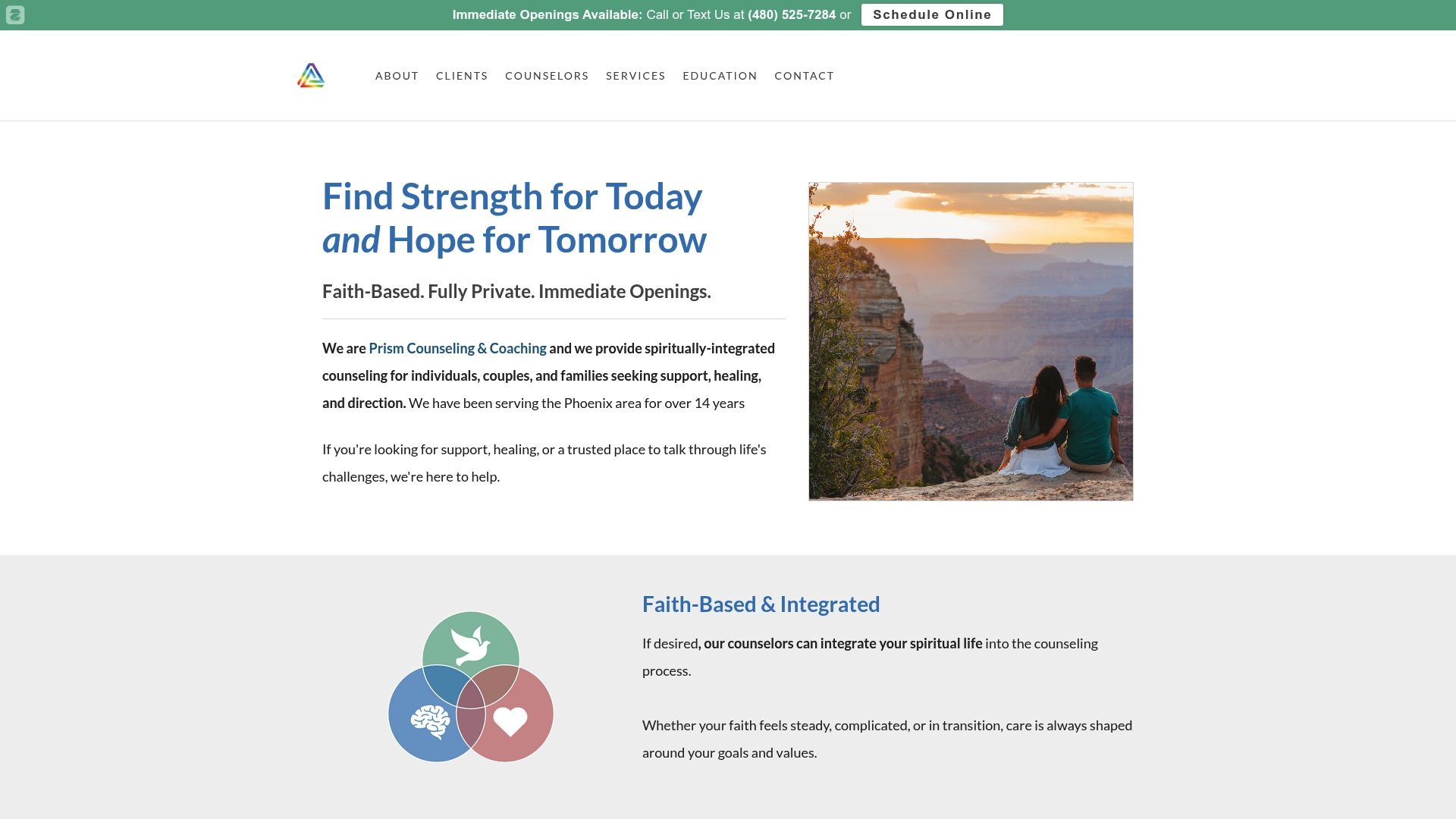
If you're paying out of pocket, start by checking current rates and requesting a written Good Faith Estimate before your first appointment. If cost is the main barrier, ask directly about sliding-scale availability to see what fits your budget. Either way, you can request an opening directly through Prism's booking page and typically hear back within days.
This article is general information, not a substitute for advice from a qualified doctor. Consult a qualified healthcare professional about your own circumstances before acting on anything here.
FAQ
How much does Christian counseling typically cost?
Christian counseling in Phoenix generally costs between $90 and $190 per session, depending on the counselor's credentials and whether you use insurance, according to local cost data. Telehealth and sliding-scale appointments tend to sit at the lower end of that range.
Is $200 a session a lot for therapy?
A session priced above the typical Phoenix range of $90 to $190 leans toward the higher end rather than being unusual. Rates at the higher end are more common for doctoral-level psychologists or specialized services like EMDR and couples work.
Can you recommend a Christian therapist in Phoenix, Arizona?
Some counseling practices in the Phoenix area offer faith-based and Christian counseling along with sliding-scale appointments for clients who need a reduced fee. Whichever provider you choose, confirm their license and ask for a written Good Faith Estimate before your first session.
How much is Christian counselling?
Pricing for Christian counseling follows the same local market as general therapy, typically $90 to $190 per session in Phoenix depending on provider type and format, according to regional cost estimates. Sliding-scale and university training clinic options can bring that cost down substantially for clients on a tighter budget.
Sources
- Know your medical bill rights when not using insurance | CMS
- What is a surprise medical bill and what should I know about the No Surprises Act? — CFPB
- Therapy Cost in Phoenix: $90–$190 a Session in a Provider-Short Metro — TherapyCostGuide