

Christian family counseling brings together evidence-based therapy and biblical wisdom to help families heal, communicate, and grow in faith. If you're ready to take the next step, Prism Counseling & Coaching serves families in the Phoenix and Peoria area with private-pay, spiritually-integrated care and typically has openings within days. For anyone in immediate crisis, please contact the 988 Lifeline by calling or texting 988 anytime, day or night.
Families who seek this kind of care often arrive carrying one or more of these struggles:
- Ongoing conflict between spouses or between parents and children
- Parenting challenges, including teen behavioral issues or defiance
- Grief, trauma, or loss affecting the whole household
- Blended-family stress and loyalty conflicts
- Marital strain, communication breakdown, or trust repair after betrayal
- Anxiety or depression in a child, teen, or parent
- Spiritual disconnection or faith crises within the family
The counselors you want to look for hold recognized licenses such as LMFT (Licensed Marriage and Family Therapist), LPC (Licensed Professional Counselor), or a doctoral credential (PhD or PsyD), and they integrate faith as a genuine clinical tool rather than a surface-level add-on.
Key Takeaways
Christian family counseling works best when it combines licensed clinical care with genuine, client-directed faith integration, and Prism Counseling & Coaching offers exactly that in the Phoenix and Peoria area.
| Point | Details |
|---|---|
| Verify credentials first | Look for LMFT, LPC, or PhD licensure and confirm the counselor is licensed in your state. |
| Faith integration is optional, not imposed | Prayer and Scripture should be offered as tools you can accept or decline, never required. |
| Private-pay means faster access | Prism Counseling & Coaching's private-pay model typically means openings within days and no insurance delays. |
| Prepare before your intake | Bring a list of concerns, prior diagnoses, medications, and any safety issues to your first session. |
| Prism Counseling & Coaching | Serves Phoenix-area families with faith-integrated counseling, sliding-scale options, and telehealth availability. |
Table of Contents
- What does Christian family counseling actually offer?
- In-person or online: which format fits your family?
- How are faith and clinical therapy actually combined?
- What happens in your first few sessions?
- How much does Christian family counseling cost?
- How do you choose the right Christian family counselor?
- Why Prism Counseling & Coaching stands out for Phoenix-area families
- A word from Tres on why this work matters
- Prism Counseling & Coaching is ready to help your family
- Helpful resources for families
- Sources
What does Christian family counseling actually offer?
Faith-integrated family therapy covers a wider range of services than many families expect. Below is a practical overview of what a well-rounded practice typically provides.
Core services:
- Family counseling: Addresses communication patterns, conflict cycles, and relational wounds across the whole family system. Goals often include improving communication, resolving conflict, and uncovering generational patterns that quietly shape how a family functions.
- Christian marriage counseling: Helps couples rebuild trust, deepen emotional intimacy, and align around shared values. Faith-based marriage work often draws on covenant theology alongside clinical tools.
- Child and teen counseling: Supports younger family members through anxiety, depression, behavioral struggles, identity questions, and school-related stress.
- Individual pastoral counseling: One-on-one sessions for adults navigating personal faith crises, grief, addiction recovery, or spiritual dryness.
- Parenting coaching: Practical tools for communication, discipline, and faith-informed discipleship within the home. Some clinicians, including those with medical or psychiatric backgrounds, also address the parent's own history to break generational cycles.
- Premarital counseling: Structured preparation for engaged couples covering conflict resolution, finances, intimacy, and spiritual alignment.
- Co-parenting mediation: Helps separated or divorced parents build a workable, child-centered partnership.
Specialist services you may also find include trauma-focused care, grief counseling, faith-based addiction support, and LGBTQ+ affirming Christian care at practices that offer it. Group formats such as parenting workshops or support groups suit families who benefit from peer connection alongside individual work.
Credential types signal specialization: an LMFT is trained specifically in family systems, an LPC focuses on individual therapy, and a PhD or PsyD often indicates advanced training in assessment or specialty areas like trauma.
Pro Tip: Ask any prospective counselor directly: "What percentage of your caseload is families?" A therapist who primarily sees individuals may lack the family-systems training your situation calls for.
In-person or online: which format fits your family?
Both in-person and telehealth options are widely available for biblical family therapy, and the right choice depends on your family's specific circumstances rather than a universal rule.
In-person sessions suit families dealing with high conflict, young children who need a neutral space, or situations where body language and relational dynamics are central to the work. The physical presence of a skilled therapist can de-escalate tension in ways that a screen sometimes cannot.
Telehealth works well for families managing packed schedules, transportation barriers, or geographic distance from qualified faith-integrated providers. Prism Counseling & Coaching's online therapy offers secure video sessions that bring the same spiritually-integrated care into your home.
Before booking a remote session, confirm these practical details:
- The counselor holds an active license in the state where you will be sitting during sessions, not just where their office is located.
- You have a private, quiet space at home where family members can speak freely.
- Your internet connection is stable enough for uninterrupted video.
- The platform used is HIPAA-compliant.
Pro Tip: State licensure for telehealth is non-negotiable. A counselor licensed only in Arizona cannot legally provide therapy to a client sitting in California, even for a single session. Always verify before your first appointment.
Additional logistics to clarify before booking: typical session length (usually 50–60 minutes, with family sessions sometimes running 75–90 minutes), current waitlist status, and whether the practice is private-pay or accepts insurance.
How are faith and clinical therapy actually combined?
Effective Christian family counseling is clinical first. Expect evidence-based models integrated with biblical theology, not a Bible study that substitutes for therapy.
Common therapeutic modalities used in faith-integrated practice include:
- Emotionally Focused Therapy (EFT): Particularly effective for couples and parent-child attachment repair; helps identify negative interaction cycles and build secure emotional bonds.
- Cognitive Behavioral Therapy (CBT): Addresses thought patterns driving anxiety, depression, and reactive behavior; pairs naturally with scriptural reframing of distorted beliefs.
- Family Systems Therapy: Examines how roles, rules, and relational triangles within a family maintain dysfunction; many Christian providers combine this with biblical teaching on family structure.
- EMDR (Eye Movement Desensitization and Reprocessing): A trauma-focused approach for processing painful memories; used for individuals within the family who carry unresolved trauma.
- Parent-training curricula: Structured programs teaching communication, boundaries, and discipline strategies rooted in both developmental research and faith values.
Many providers combine research-based therapies with biblical teaching and optional spiritual practices, creating a blended approach that honors both clinical rigor and spiritual depth.
What faith integration looks like in practice:
- Prayer at the start or close of a session, offered as an option rather than a requirement
- Scripture used as a discussion resource to explore themes like forgiveness, identity, or hope
- Collaboration with a pastor or church leader when the client consents and it serves the treatment plan
- Spiritual disciplines (journaling, meditation on Scripture, community worship) offered as between-session coping tools
Faith complements clinical skill; it does not replace it. A licensed counselor will always refer to a psychiatrist or physician when symptoms suggest a need for medication evaluation, including suicidal ideation, psychosis, severe mood episodes, or symptoms that may have a medical cause. If you or a family member is in crisis right now, call or text 988 immediately.
| Modality | Best fit |
|---|---|
| EFT | Couples rebuilding trust; parent-child attachment repair |
| CBT | Anxiety, depression, reactive thinking in teens and adults |
| Family systems therapy | Whole-family conflict, role confusion, generational patterns |
| EMDR | Individual trauma within a family member |
| Parent-training curricula | Parenting skill-building, discipline, communication |
What happens in your first few sessions?
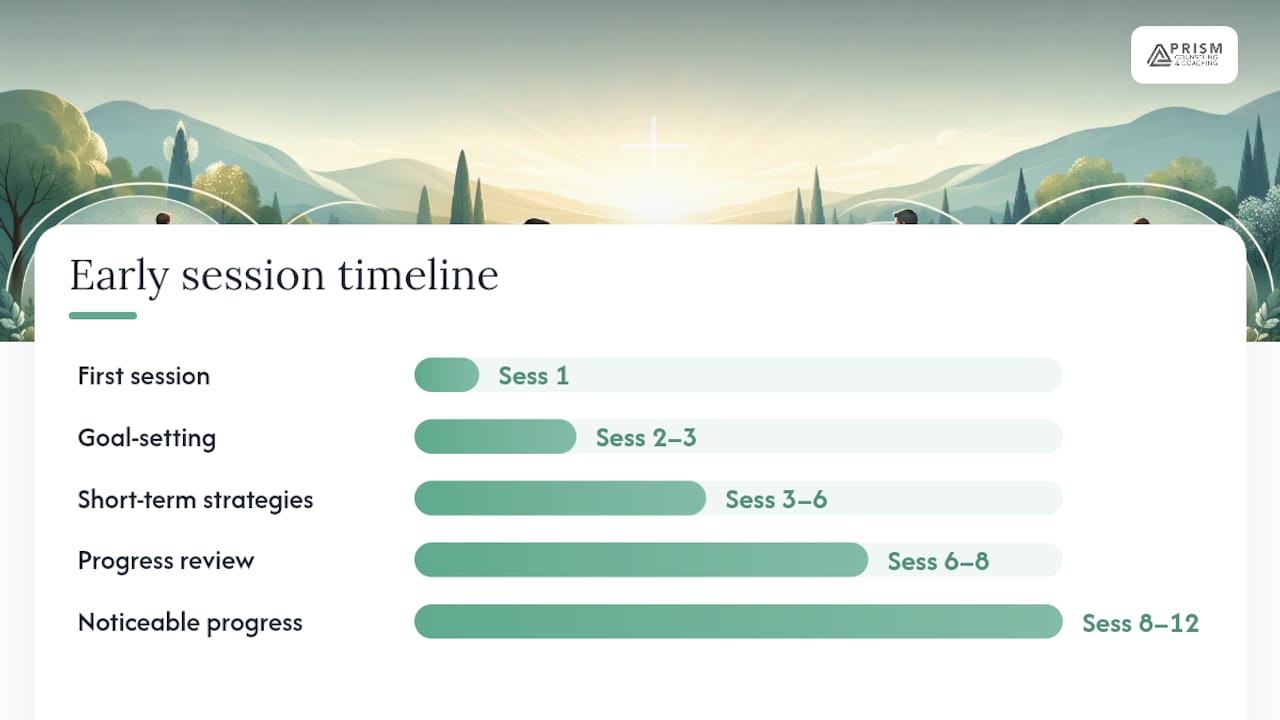
The first session is not therapy in the traditional sense. It is an intake: a structured conversation where the counselor gathers information, listens to each person's perspective, and begins to understand the family's history and goals.
A typical early process looks like this:
- Intake call or form: Basic information about presenting concerns, family composition, prior diagnoses or medications, and safety concerns. You will also review confidentiality and its limits.
- First session assessment: The counselor explores family history, communication patterns, and each member's experience of the problem. Expect questions, not solutions, at this stage.
- Goal-setting (sessions 2–3): Together, you identify specific, measurable goals. A family might aim to reduce weekly arguments, improve a parent-teen relationship, or process a shared loss.
- Short-term strategies (sessions 3–6): The counselor introduces tools tailored to your goals, whether communication frameworks, emotional regulation skills, or faith-based coping practices.
- Progress review (around session 6–8): A structured check-in to assess what is working, adjust the treatment plan, and decide on next steps.
To prepare for your intake, bring or be ready to discuss:
- A brief list of your main concerns and what you hope changes
- Each family member's role in the issue as you see it
- Any prior diagnoses, current medications, or previous therapy experiences
- Any safety concerns (self-harm, substance use, domestic conflict)
- Your payment method and insurance information if applicable
Realistic progress often becomes noticeable within 8–12 sessions for families who attend consistently and practice skills between appointments. Lasting change, especially when generational patterns are involved, typically requires longer engagement and whole-family participation.
How much does Christian family counseling cost?
Pricing varies significantly depending on the practice model, and understanding the options before you book prevents surprises.
Many faith-integrated practices operate on a private-pay model, meaning they do not bill insurance directly. This preserves confidentiality (no diagnostic codes sent to insurers), allows for more flexible session structures, and often means shorter wait times. Prism Counseling & Coaching operates this way, with sliding-scale and reduced-fee options available for qualifying clients.
Typical cost considerations:
- Standard individual or family sessions generally run 50–60 minutes; family sessions may be longer.
- One-time structured resources, such as the Built for Resilience Christ-centered parenting curriculum from Focus on the Family, are available for a flat fee for lifetime digital access, illustrating what a standalone faith-based parenting resource costs outside of ongoing therapy.
- Sliding-scale fees reduce the per-session cost based on household income; not every practice offers this, so ask directly.
- Employee Assistance Programs (EAPs) sometimes cover a limited number of sessions with a faith-integrated counselor; confirm with your HR department whether your EAP allows you to choose your own provider.
- Session packages or prepaid blocks may reduce the per-session rate at some practices.
Before you book, confirm these financial details:
- Whether the practice is in-network with your insurance plan (many faith-integrated practices are not)
- Whether the practice provides a superbill you can submit for out-of-network reimbursement
- Whether your insurance plan's mental health benefits cover family sessions specifically
- Whether a sliding-scale application is available and what documentation is required
If cost is a barrier, ask about reduced-fee options directly. Many practices, including Prism Counseling & Coaching, have pathways to make care accessible without a long wait.
How do you choose the right Christian family counselor?
The right counselor holds both clinical credentials and a genuine, thoughtful approach to faith integration. Here is what to look for and what to avoid.
Questions to ask before booking:
- What is your license type, and are you licensed in my state?
- What training do you have in family systems therapy or trauma-focused approaches?
- How do you integrate faith into sessions, and is prayer or Scripture use optional?
- Have you worked with families dealing with [situations similar to ours]?
- Do you collaborate with pastors or church leaders, and how does that work?
- What does your intake process look like, and how do you measure progress?
Red flags to watch for:
- Promises of quick results or guaranteed outcomes
- Pressure to attend a specific church or adopt a particular theological position
- Vague or evasive answers about confidentiality and its limits
- Practitioners who use the title "therapist" or "counselor" without a verifiable state license
- Faith used as a reason to avoid addressing clinical symptoms (depression, trauma, suicidal ideation)
Trust signals that matter:
- Published credentials (LMFT, LPC, PhD, PsyD) with a verifiable state license number
- A clear description of therapeutic modalities used
- A defined client process from intake through treatment review
- A written confidentiality and privacy policy
- Authentic client testimonials or outcome descriptions
Understanding why faith alone may not resolve relational conflict is part of choosing well. A skilled Christian counselor will tell you plainly that spiritual maturity and clinical skill work together, and that one does not substitute for the other.
Pro Tip: Ask specifically: "If I disagree with a spiritual practice you suggest, can I decline it without affecting our work together?" A trustworthy counselor will say yes without hesitation.
Why Prism Counseling & Coaching stands out for Phoenix-area families
Prism Counseling & Coaching provides faith-integrated, biblically grounded counseling in the Phoenix and Peoria area, serving families, couples, and individuals through a private-pay, spiritually-integrated model built over more than 14 years of practice.
The practice offers a broad range of services under one roof: family counseling, Christian marriage counseling, parenting coaching, individual therapy, teen counseling, premarital counseling, grief support, trauma care, and an employer-focused faith-based EAP program. Telehealth sessions are available alongside in-person appointments, giving families flexibility without sacrificing the quality of care.
Because Prism Counseling & Coaching operates on a private-pay model, clients typically experience openings within days rather than weeks. Confidentiality is protected without the diagnostic coding requirements that insurance billing introduces. Sliding-scale options are available for qualifying clients, and the practice's small size means each family receives personalized attention rather than a rotating roster of providers.
Counselors at Prism hold recognized clinical credentials and bring specialized training in areas including trauma, parenting, anxiety, depression, and addiction. Faith integration is woven throughout the clinical process: prayer, Scripture, and spiritual disciplines are offered as tools, always at the client's discretion, always alongside evidence-based interventions.
A word from Tres on why this work matters
Faith-integrated counseling is, in my view, one of the most honest forms of therapy available to families. It refuses to separate the spiritual from the psychological, because for most families of faith, those two dimensions are not separate. Your beliefs shape how you interpret conflict, how you assign meaning to suffering, and how you understand forgiveness. A counselor who ignores that is working with half the picture.

What I find families underestimate is how much courage it takes to bring the whole family into a room and say, "We need help." There is still a quiet shame around that in many faith communities, as though struggle signals a failure of faith. It does not. Scripture is full of families in crisis, and the consistent message is that healing comes through honest engagement, not through pretending the wound is not there.
The families I have seen do the hardest work are the ones who show up consistently, practice what they learn between sessions, and allow the process to touch not just behavior but belief. That combination of clinical skill and spiritual depth is exactly what a well-trained Christian counselor offers. You deserve both.
Prism Counseling & Coaching is ready to help your family
Families in the Phoenix and Peoria area can book a first appointment with Prism Counseling & Coaching within days, not weeks. The private-pay model means no insurance authorization delays, no diagnostic codes shared with third parties, and a counselor who knows your family's name and story from session one.
Here is what Prism offers families right now:
- Family counseling for communication, conflict, and relational repair
- Christian marriage counseling for couples navigating trust, intimacy, or major transitions
- Parenting coaching grounded in both developmental research and biblical wisdom
- Teen and child counseling for anxiety, depression, behavioral struggles, and identity questions
- Online therapy via secure telehealth for families who need flexibility
- Premarital counseling for engaged couples building a strong foundation
- Employer EAP partnerships for organizations seeking faith-based mental health support
Sliding-scale options are available for qualifying clients. To learn more about the practice's approach or to schedule your intake appointment, visit the Prism Counseling & Coaching Christian counseling page or call the practice directly. Your first step is simply reaching out.
Helpful resources for families
If you or a family member is in crisis right now, call or text 988 to reach the 988 Lifeline, the national 24/7 crisis line for suicide prevention and mental health support. For immediate danger, call 911.
Additional resources worth bookmarking:
- 988 Lifeline — Free, confidential crisis support by call or text, available 24/7.
- Built for Resilience — Focus on the Family — A Christ-centered parenting curriculum available for $199.99 lifetime digital access; structured, faith-grounded parenting tools for home use.
- Christian Counseling Resources — Prism Counseling & Coaching — Articles, videos, and podcast episodes organized by topic for families in any stage of the counseling process.
- Benefits of faith-based marriage counseling — A practical overview of how faith-based counseling addresses marriage conflict.
- Ask a Christian Counselor Podcast — Prism Counseling & Coaching — Audio episodes answering common questions about faith-integrated therapy, useful for families exploring whether counseling is right for them.
This article is general information, not a substitute for advice from a qualified doctor. Consult a qualified healthcare professional about your own circumstances before acting on anything here.
Sources
Recommended
- Christian Counseling Resources | Articles, Videos, and Podcast Resources by Topic - Prism Counseling & Coaching | Faith-Based Counseling and Spiritually-Integrated Therapy in Peoria and Phoenix AZ
- Prism Counseling & Coaching | Faith-Based Counseling and Spiritually-Integrated Therapy in Peoria and Phoenix AZ - Prism Counseling & Coaching | Arizona Christian Counseling and Spiritually-Integrated Therapy in Peoria and Phoenix
- Prism Counseling & Coaching | Faith-Based Counseling and Spiritually-Integrated Therapy in Peoria and Phoenix AZ - Prism Counseling & Coaching | Arizona Christian Counseling and Spiritually-Integrated Therapy in Peoria and Phoenix