

Six paths work for therapy without insurance: sliding-scale private practices, community mental health centers and FQHCs, university training clinics, employer EAPs, and nonprofit networks like Open Path Collective. Expect to pay small or no fees for most of these routes, though standard private-pay therapy runs higher. If you need to start today, call the HRSA clinic finder or ask your HR department about EAP benefits this afternoon.
TL;DR:
- Community clinics and FQHCs offer income-based care that can be free or very low cost, but wait times often extend from several weeks to over a month.
- Sliding-scale private practices keep fees flexible based on income, yet clinicians usually do not list these rates publicly, requiring direct inquiry for availability.
- University training clinics provide affordable therapy, but their limited schedules follow the academic calendar, making immediate help difficult outside semester times.
- Online therapy platforms may provide immediate access with financial aid options, though licensure and treatment scope can vary by state and plan type.
- Employee assistance programs often deliver free, confidential counseling within days, making them the fastest and most accessible low-cost option for employed individuals.
Table of Contents
- Which Low-Cost Therapy Route Should You Try First?
- What Are Sliding-Scale Rates and How Do You Actually Get One?
- What Are FQHCs and How Do They Offer Income-Based Care?
- Can University Training Clinics Provide Real Therapy?
- Do Online Therapy Platforms Offer Financial Aid?
- Does Your Employer Already Cover Free Counseling?
- How Do You Prepare to Get an Appointment Fast?
- A Faith-Based Perspective on Private-Pay Care Without Insurance
- Ready to Talk to Someone Who Understands Faith and Struggle Together?
- Resources Worth Bookmarking
- Sources
- FAQ
Which Low-Cost Therapy Route Should You Try First?
The right starting point depends on how fast you need help and what kind of care you're looking for. Here's how the six main options stack up:
- Employer EAP — often free for several sessions, available within days, best if you're currently employed.
- Open Path Collective — one-time membership fee, then low-cost sessions per visit, matched within about a week.
- Community mental health centers / FQHCs — income-based fees, sometimes no cost, but waitlists can run several weeks.
- Sliding-scale private practice — fees vary depending on the clinician, with some reduced rates available, availability varies week to week.
- University training clinic — low-cost sessions, tied to the academic calendar.
- Online therapy platform with financial aid — variable pricing, often fastest to start, licensure limited by state.
If you're in crisis right now, none of the above matters as much as calling or texting 988. That line runs separately from every option above and doesn't require paperwork, income proof, or a wait.
What Are Sliding-Scale Rates and How Do You Actually Get One?
A sliding scale means a therapist adjusts your session fee based on income, sometimes charging as little as $30, sometimes $120 or more depending on the practice and region. Most clinicians don't post these rates publicly. They keep a handful of reduced-fee slots for exactly the people who ask.
That's the part almost nobody tells you: the sliding-scale opening you want usually isn't listed anywhere. You have to call or email and request it directly.
- Ask specifically: "Do you offer a sliding-scale rate, and is one available right now?"
- Be ready to briefly describe your income situation; some practices ask for a pay stub or a self-reported income statement, others take your word for it.
- If a therapist doesn't have an opening, ask if they can refer you to a colleague who does.
Private-pay therapy at full rate still makes sense for some people, especially if you need a specialist, flexible scheduling, or more privacy than a sliding-scale slot allows. Prism-counseling's sliding-scale program works this way, reserving reduced-fee openings alongside standard private-pay sessions.
Pro Tip: Call in the morning. Cancellations and newly opened sliding-scale slots tend to get filled by early afternoon, especially at smaller practices.
What Are FQHCs and How Do They Offer Income-Based Care?
Federally Qualified Health Centers and community mental health centers adjust fees to your income, and many people pay very little or nothing at all. These clinics receive federal funding specifically to serve people regardless of ability to pay.
Finding one is straightforward:
- Use the HRSA clinic finder to search by zip code.
- Call 211 for a local referral if you don't have internet access.
- Contact your state's mental health agency directly, a route SAMHSA also recommends for people without coverage.
Expect a wait. Demand at these clinics is high, and initial intake can take two to six weeks depending on your area. If cost is your biggest barrier and you can be patient, this is often the strongest first move.
Can University Training Clinics Provide Real Therapy?
Yes. Sessions at university training clinics typically cost $5 to $60, and the clinician you see is a graduate student working under direct faculty supervision. That supervision is a real safeguard, not a formality. Every treatment plan gets reviewed.
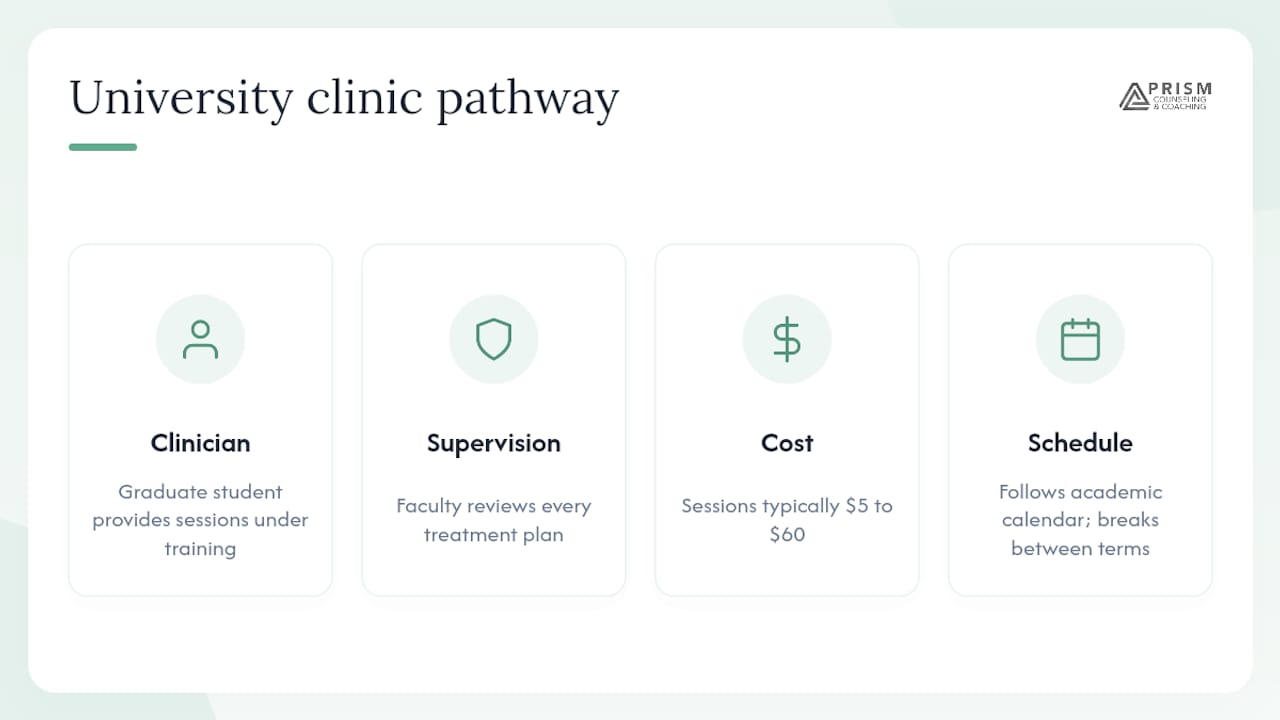
The tradeoff is scheduling. Clinics follow the academic calendar, so sessions often pause between semesters and during summer break. Search "[your city] university psychology clinic" or "[your city] counseling training clinic" to find one. These programs suit people who don't need immediate crisis care and can work around a school schedule.
Do Online Therapy Platforms Offer Financial Aid?
Online platforms usually price by plan type. Messaging-only plans cost less than plans that include live video sessions, and most bill weekly or monthly rather than per session. Some platforms offer income-based discounts or financial-aid applications, though these aren't always advertised on the homepage.
- Check the platform's "financial aid" or "scholarship" page directly, not just the pricing page.
- Ask your employer if it subsidizes access to an online platform as a benefit.
- Compare total monthly cost, not just the headline number for a single session.
The upside is speed and convenience. You can often start within a day. The downside is that therapist licensure is tied to your state, and messaging-only plans may not meet your needs if you're dealing with something more complex than day-to-day stress.
Does Your Employer Already Cover Free Counseling?
Check your benefits portal before you spend a dollar elsewhere. Employee Assistance Programs are one of the most overlooked resources available to working adults, largely because most employees never realize they have access.
- Most EAPs offer several free, confidential counseling sessions per year.
- Access usually requires a call to a dedicated EAP line, not your regular HR contact, which keeps the process private.
- If you have an HSA or FSA, those pre-tax funds can cover therapy costs directly, lowering your effective out-of-pocket spend, according to Healthcare.
- IRS Publication 969 outlines which expenses qualify, so check it before assuming a cost is covered.
Use your EAP first if you have one. Once those sessions run out, an HSA or FSA can carry you through ongoing private-pay care.
How Do You Prepare to Get an Appointment Fast?
A little preparation cuts your wait time significantly. Here's what actually speeds things up:
- Have a short script ready: "I'm looking for a sliding-scale opening or a training-clinic appointment. Do you have availability?"
- Gather income documentation in advance, such as a recent pay stub, tax return, or a written self-report if you're unemployed or between jobs.
- If you lack paperwork, say so directly. Many programs accept a signed self-declaration of income instead.
- Ask about waitlist policies. Some clinics call in the order you signed up. Others prioritize based on need.
Pro Tip: Contact three to five providers in the same week instead of one at a time. Sliding-scale slots fill fast, and casting a wider net gets you seen sooner.
If you're in immediate danger or crisis, skip all of this and call or text 988, or use the Crisis Text Line by texting HOME to 741741. These are free, immediate, and don't require documentation of any kind.
A Faith-Based Perspective on Private-Pay Care Without Insurance
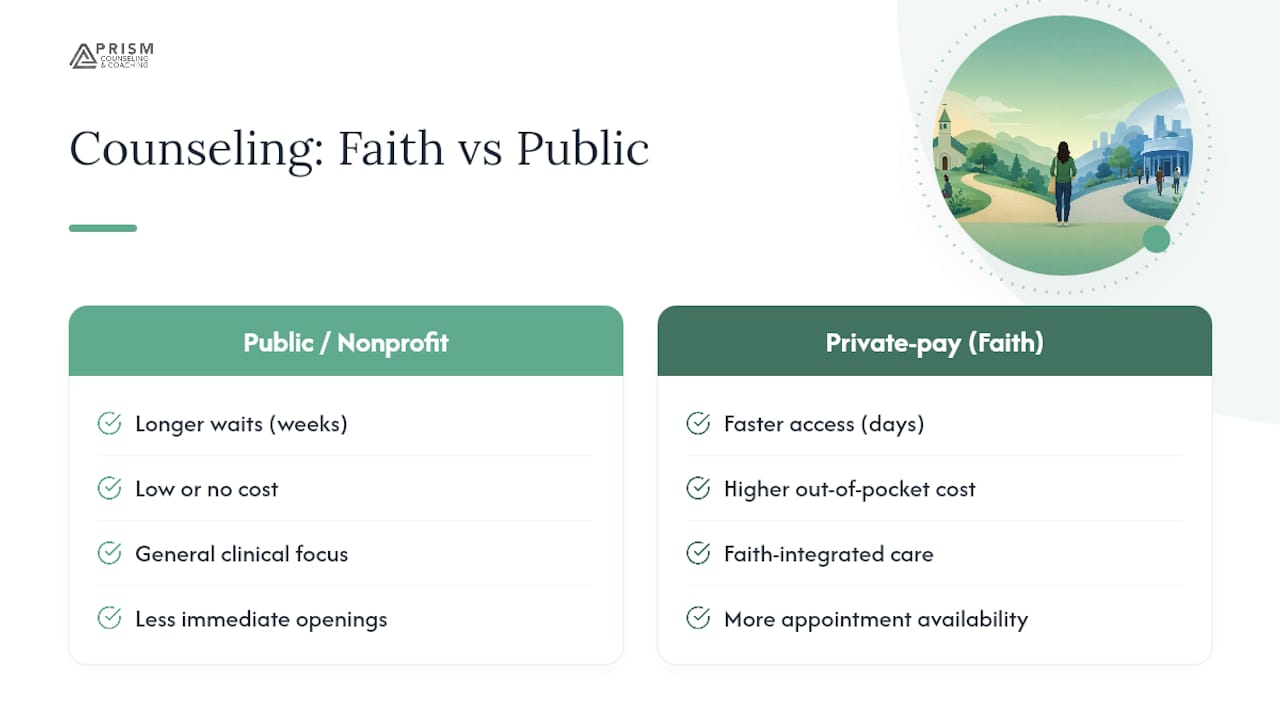
Public and nonprofit options exist for good reason, and we'd rather you use them than delay care over cost. But private-pay practices fill a different gap: speed and specialization, particularly for people who want their faith woven into treatment rather than set aside from it.
Some counseling and coaching practices specialize in faith-integrated therapy that treats spiritual life as part of the healing process. Small, private-pay models can offer appointment openings within days rather than weeks, balancing higher cost for faster and more specialized access, which may not fit every budget. This option suits individuals seeking more immediate or spiritually specific care after considering public alternatives.
— Tres
Ready to Talk to Someone Who Understands Faith and Struggle Together?
If the free and low-cost routes above don't fit what you're looking for, Certain private practices offer faith-integrated counseling with appointment openings measured in days rather than the longer waits typical at community clinics and training programs.
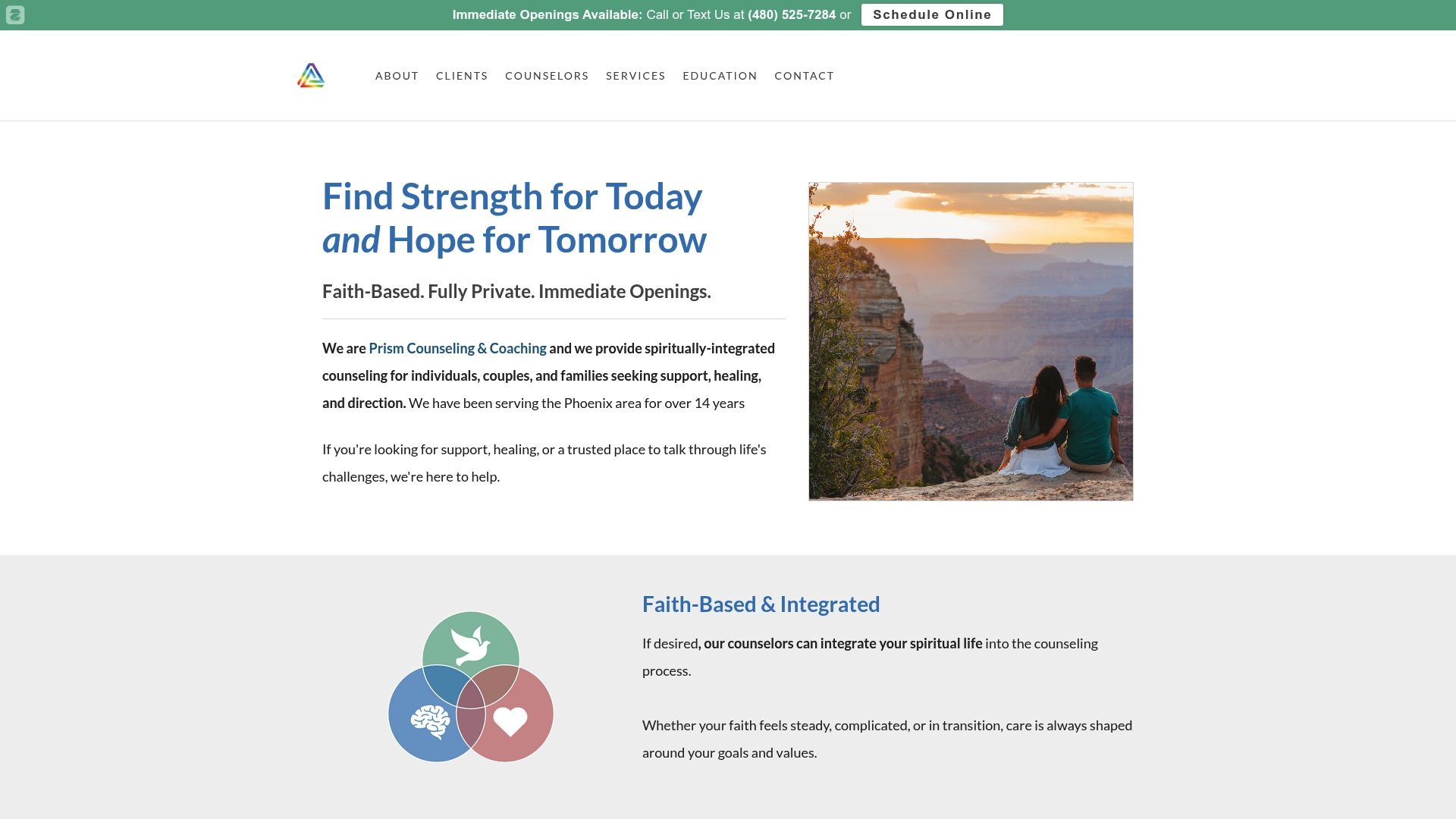
Our faith-based counseling services are built for people who want their anxiety, grief, or relationship struggles addressed alongside their spiritual life, not around it. We're a private-pay practice, which means no insurance authorization delays and no waiting for a slot to open up on someone else's schedule. You can review our payment options and see what a session actually costs before you commit to anything.
If private pay isn't within reach right now, that's okay. Go back through the sliding-scale, FQHC, and Open Path options above first. When you're ready for faith-centered care, reach out through our contact page to check current availability.
Resources Worth Bookmarking
- SAMHSA — No insurance: find support: government helpline and provider search.
- HRSA clinic finder: locates income-based FQHCs near you.
- Open Path Collective: vetted therapists at reduced membership rates.
- IRS Publication 969: rules for using HSA/FSA funds on therapy.
Sources
- SAMHSA — No insurance: Find professional or program support
- HRSA find a health center
- Healthcare
- IRS Publication 969 — Health Savings Accounts and other tax-favored health plans
FAQ
How Do I Get a Therapist With No Insurance?
Start with the HRSA clinic finder for income-based FQHC care, check Open Path Collective for vetted sliding-scale therapists, or call practices directly to ask about reduced-fee openings.
What If I Need Therapy but Can't Afford It?
Call the SAMHSA helpline at 1-800-662-4357 for free guidance toward low-cost providers, and ask any therapist you contact directly whether they offer a payment plan or sliding-scale rate.
How Can I Get Counseling if I Don't Have Insurance?
Community mental health centers, university training clinics, and workplace EAPs all provide counseling without requiring insurance, with costs and fees varying by program.
What Is the Two-Year Rule in Therapy?
There's no standardized "two-year rule" that applies broadly across the therapy field; if you've seen this referenced somewhere, it likely refers to a specific insurance policy or state regulation rather than a general therapy practice.
Is Faith-Based Counseling More Expensive Than Standard Therapy?
Faith-integrated private-pay practices like Prism Counseling & Coaching typically cost more than sliding-scale or community options, but they offer faster scheduling and specialized spiritual care that public programs generally don't provide.