
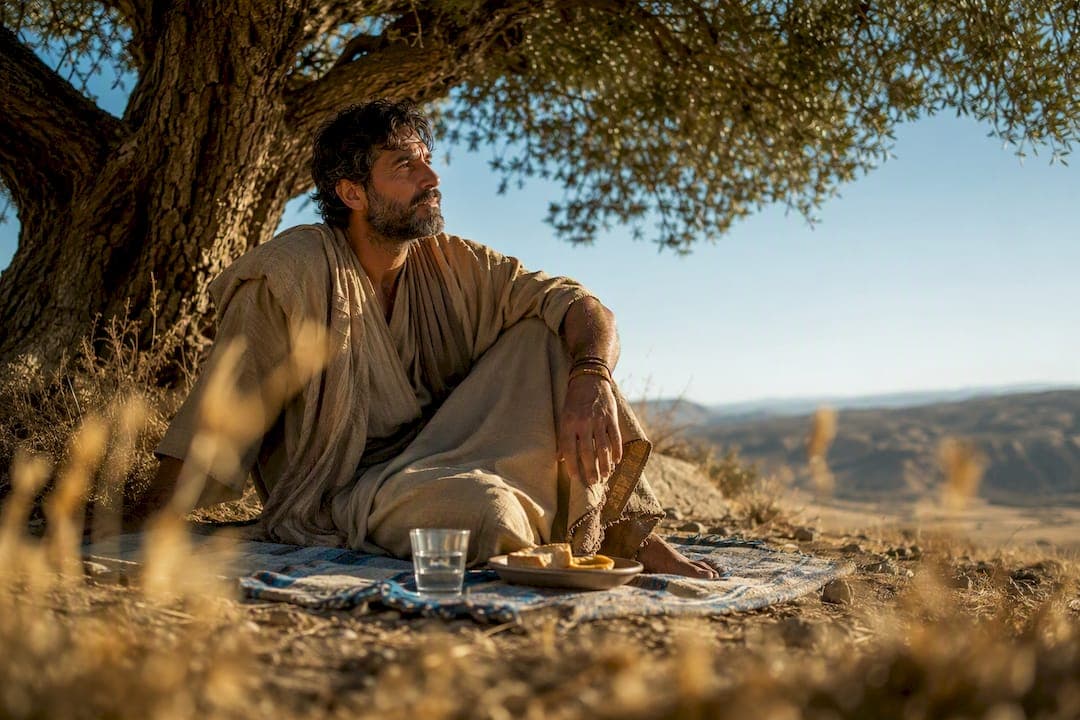
Recovery from burnout is possible, and it usually begins smaller than you'd expect. Rest first. Tell one trusted person what you're carrying. Pause any new commitment for now. If you notice thoughts of self-harm or feel unsafe, treat that as urgent and reach out to a counselor or crisis line today. Faith-integrated counseling can walk alongside you as you rebuild.
TL;DR:
- Rest is essential and acts as an act of obedience, but recovering from burnout often needs weeks or months, not just days of pause.
- Burnout involves physical exhaustion, emotional detachment, cognitive difficulty, and spiritual dryness that persist beyond typical tiredness.
- Deep recovery for pastors and caregivers may require structural changes, such as reduced workloads or sabbaticals, rather than only personal effort.
- Signs like suicidal thoughts, persistent loss of interest, or severe trauma symptoms indicate the need for urgent professional help beyond rest.
- Combining faith-based practices with therapy shortens recovery time and addresses underlying issues, but patience with the slow process remains crucial.
Table of Contents
- What Is Burnout, and How Is It Different From Being Tired?
- What Does the Bible Say About Burnout and Rest?
- What's the Practical Path Back From Burnout?
- Why Ministry and Caregiving Roles Carry Extra Risk
- When Do You Need Professional Help, Not Just Rest?
- A Counselor's View: What Recovery Actually Looks Like
- The Part of Burnout Recovery Christians Get Wrong
- How Prism Counseling & Coaching Supports Your Recovery
- Where to Turn for Ongoing Support
- Sources
- FAQ
What Is Burnout, and How Is It Different From Being Tired?
Burnout isn't the same as a hard week or a bad night's sleep. The World Health Organization defines it as an occupational phenomenon resulting from chronic workplace stress that hasn't been successfully managed, marked by exhaustion that doesn't resolve with ordinary rest. A weekend off fixes tiredness. Burnout requires something deeper. The distinction matters for Christians who feel guilty for still being drained after "enough" prayer or sleep. You're not failing at recovery. You're facing a condition that behaves differently than normal fatigue.
Watch for these signs across three domains:
- Physical: chronic exhaustion, frequent headaches or stomach issues, insomnia, or getting sick more often than usual
- Emotional: cynicism, irritability, feeling detached from people you used to care about, or a persistent sense of failure
- Cognitive: trouble concentrating, forgetfulness, and a shrinking capacity to make decisions
- Spiritual: dry or joyless prayer, resentment toward ministry or church responsibilities, and a nagging sense that God has gone quiet
Ask yourself: has this lasted weeks, not days? Does a day off leave you just as depleted? Do you dread things you once loved? Answering yes to two or more is a signal to take the next steps seriously, not a verdict on your character.
What Does the Bible Say About Burnout and Rest?
Scripture doesn't treat exhaustion as a spiritual failure. It treats it as a human condition God addresses with practical, physical care.
Look at Elijah in 1 Kings 19. After his greatest spiritual victory on Mount Carmel, he collapses under a tree and asks God to let him die. God's response isn't a rebuke. An angel gives him food, lets him sleep, feeds him again, and only then speaks to him in a whisper. The pattern is instructive: God restores the body before he addresses the soul.
Jesus modeled the same rhythm. He regularly withdrew from crowds and even from his disciples to pray alone (Luke 5:16). Sabbath itself was built into creation, not added as a religious rule, a weekly reminder that limits are part of design, not a lack of faith.
Practices worth adopting this week:
- Keep a real Sabbath: one day where work, email, and ministry tasks stop
- Try a breath prayer, a short phrase like "Be still and know" repeated slowly, when anxiety spikes
- Practice Lectio Divina, reading a short passage slowly several times, sitting with what stands out rather than rushing to application
Rest, in this framing, is obedience. It's how you steward the body and mind God gave you, not evidence you've stopped trusting him.
What's the Practical Path Back From Burnout?
Recovery works best in layers: what you do in the next three days, what you build into daily life, and what you renegotiate over the coming weeks and months.
In the first 72 hours:
- Sleep and eat, even if you don't feel like it. Your body needs fuel before your mind can problem-solve.
- Tell one trusted person exactly how you're doing, in plain language, not a spiritual summary.
- Decline every new request or commitment until you've had at least a few days to stabilize.
- If someone else can cover a household or work duty this week, let them.
Daily stabilization steps worth building in immediately:
- A consistent sleep and wake time, even on weekends
- Ten to twenty minutes of low-intensity movement, a walk counts
- One short spiritual practice, prayer, a psalm, or silence, rather than a lengthy devotional you'll skip when tired
- Small, regular meals instead of skipping food during stress
Weekly and seasonal changes carry more weight over time:
- Protect a real Sabbath rhythm, not just an hour of rest wedged between errands
- Renegotiate at least one recurring commitment that's draining you
- Delegate a specific task this month, not "someday"
- Consider whether a longer break, a sabbatical or extended leave, is realistic given your role
Community matters here too. A small group, a spiritual director, or a peer support setting gives you somewhere to be honest without managing anyone else's expectations. Mental Health Grace Alliance runs free, Christ-centered support groups designed specifically for people carrying this kind of exhaustion, and they're built around peer accountability rather than a fee or intake process.
Boundary language doesn't have to be complicated. Try: "I can't take that on right now, but I want to help you find someone who can." Or with a ministry leader: "I need to step back from this responsibility for a season so I can come back healthy." Neither sentence requires an apology.
Pro Tip: Recovery rarely moves in a straight line. Expect good weeks followed by harder ones. Set micro-goals, like one full night of sleep or one boundary held, rather than measuring yourself against how you felt before burnout hit. Protecting margin in your schedule matters more than any single practice.
Why Ministry and Caregiving Roles Carry Extra Risk
Pastors, church staff, and long-term caregivers face a specific version of burnout, one tangled up with identity. When your calling and your job are the same thing, stepping back can feel like betrayal rather than wisdom. Add chronic exposure to other people's trauma, grief, and crisis, and the exhaustion compounds in ways a typical job doesn't produce.
Pastoral burnout often needs more than a short vacation. Structural change, not just personal willpower, is frequently what actually resolves it.
Concrete options worth raising with elders or a board:
- A temporary reduction in preaching or counseling load
- A defined sabbatical with a clear return date and coverage plan
- Bringing in outside help for pastoral care duties during recovery
When you approach leadership, be specific about what you need and for how long, and ask what confidentiality protections apply to that conversation. Changing your role, even temporarily, can be the most faithful choice available, not a departure from calling. Prism-counseling's resources for pastors and its article on preventing ministry burnout go deeper into how to have that conversation well.
When Do You Need Professional Help, Not Just Rest?
Some signs mean it's time to involve a counselor, not just adjust your schedule. Treat these as red flags requiring prompt attention:
- Thoughts of suicide or self-harm, or a sense that life isn't worth continuing
- Loss of interest or pleasure in nearly everything, most days, for two weeks or more
- Intrusive memories, flashbacks, or symptoms that suggest unresolved trauma
- Severe changes in sleep or appetite that don't improve with rest
- Any situation where your safety or someone else's is at risk
Faith-integrated therapy doesn't replace prayer and Scripture. It works alongside them, with a counselor trained to recognize when burnout overlaps with depression, anxiety, or trauma that rest alone won't resolve. A first session typically involves an intake conversation, an honest look at symptoms and history, and a collaborative plan that respects your beliefs rather than setting them aside. Prism-counseling's approach to stress-related counseling outlines what that process looks like in practice.
A Counselor's View: What Recovery Actually Looks Like
Most people I've walked alongside through burnout expect a quick bounce back. It rarely works that way. Recovery tends to move in a slow arc, better weeks followed by a hard relapse, then steadier ground again. That pattern is normal, not a sign you're doing it wrong.
Faith and clinical care aren't competing paths. The strongest recoveries I've seen combine both, spiritual practices that restore identity and meaning, alongside therapy that addresses the nervous system and thought patterns burnout leaves behind.
Many who have experienced burnout find that rest matters, but a trained counselor who understands faith can shorten the distance between exhaustion and genuine restoration. If you're not sure where to start, call one trusted friend today, and consider scheduling an intake conversation this week.
The Part of Burnout Recovery Christians Get Wrong
Most advice on burnout treats it as a scheduling problem: work less, sleep more, add a retreat. That's incomplete. The deeper issue for many Christians is theological, a quiet belief that rest has to be earned or that struggling proves weak faith. Until that belief shifts, better calendars won't hold.
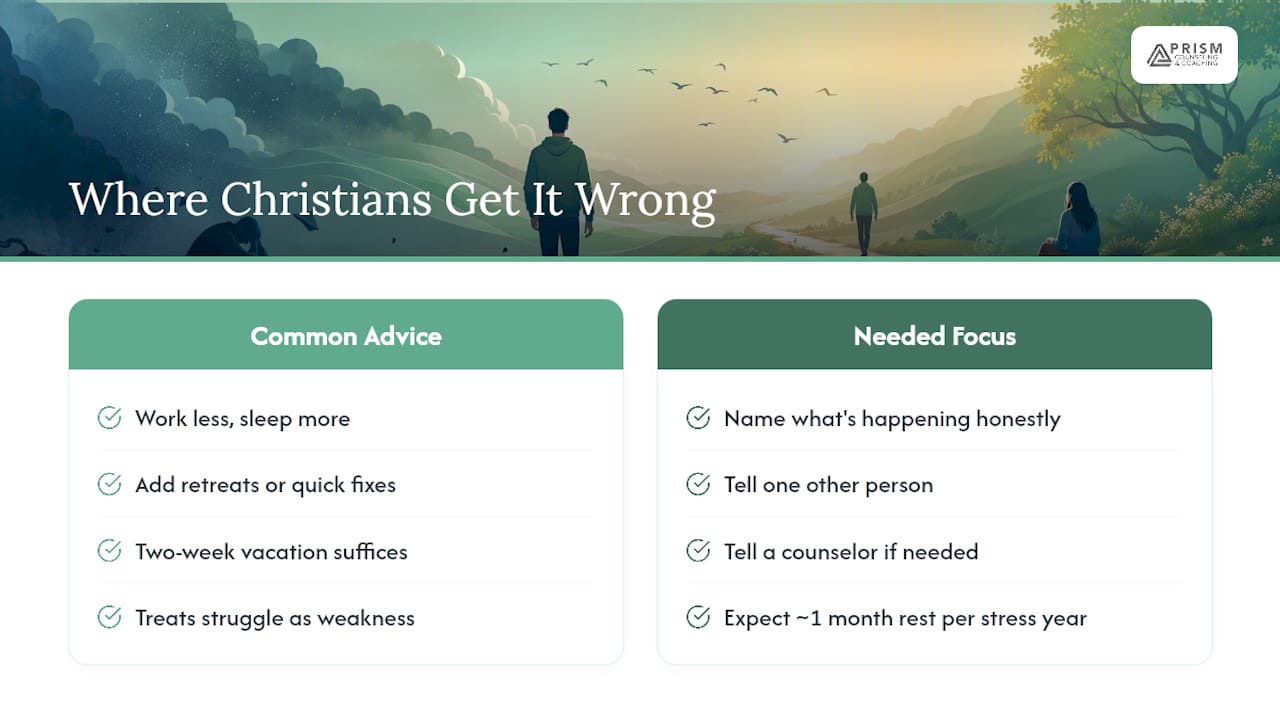
The conventional wisdom also underestimates how long recovery actually takes. A commonly suggested guideline among practitioners is that recovery may take about a month of intentional rest for each year spent under prolonged high stress, though this varies and is not guaranteed. That's not a clinical guarantee, but it's a useful corrective to the idea that a two week vacation resets a burned out system.
If you take one thing from this: prioritize naming what's happening honestly, to yourself, to one other person, and if needed, to a counselor, before you try to fix your schedule. Shame thrives in silence. Recovery starts the moment that silence breaks.
— Tres
How Prism Counseling & Coaching Supports Your Recovery
Some faith-integrated care providers offer services without long waits. Certain small, private-pay practices can typically offer openings within days, not weeks, for anxiety, depression, trauma, and the kind of chronic stress that leads to burnout.

Sessions can integrate faith into the therapeutic process, whether for individuals, couples, or pastors considering a break. Conversations are kept private and may avoid some delays or oversight common with insurance-based care.
If you recognize your own exhaustion in what you've just read, the next step is simple: visit Prism-counseling's faith-based counseling page to see current openings and schedule an initial session.
Where to Turn for Ongoing Support
For a clinical anchor, the WHO's definition of occupational burnout helps distinguish exhaustion from a diagnosable condition. For free, peer-led support, Mental Health Grace Alliance runs Christ-centered groups built specifically around mental health recovery. Congregations wanting to build mental-health awareness into their ministry can also connect through NAMI FaithNet, which links churches with education and referral resources.
This article is general information, not a substitute for advice from a qualified doctor. Consult a qualified healthcare professional about your own circumstances before acting on anything here.
Sources
- Mental Health Grace Alliance — About Grace Alliance
- Burned Out — topical references (BibleHub)
- Burnout and Recovery: An Introduction for Pastors — The Brainerd Institute
FAQ
How do I recover from burnout biblically?
Start with rest as an act of obedience, not a concession. Follow Elijah's pattern in 1 Kings 19, sleep, eat, and let God address your soul only after your body's basic needs are met, while telling a trusted person what you're carrying.
What is the rule of thumb for how long burnout recovery takes?
There's no fixed clinical figure, but a commonly cited practitioner guideline suggests roughly one month of intentional recovery for every year spent under sustained high stress. Treat it as a rough expectation setter, not a guarantee, since recovery is rarely linear.
How long does it take to recover from burnout?
Timelines vary widely depending on severity and whether other conditions like depression are present. Expect a nonlinear process with better weeks and setbacks, and know that ministry-related burnout in particular often requires more than a short break.
What does the Bible say about burnout?
Scripture treats exhaustion as a human limitation God responds to with care, not judgment. Jesus regularly withdrew to pray, and Sabbath was built into creation as a rhythm of rest, not a reward for finishing enough work.
When should I see a professional instead of just resting more?
Seek help promptly if you notice thoughts of self-harm, loss of interest in nearly everything for two weeks or more, or severe sleep and appetite disruption. Faith-integrated counseling, like the care offered through Prism-counseling's stress-focused services, can address these alongside your spiritual practices rather than instead of them.