
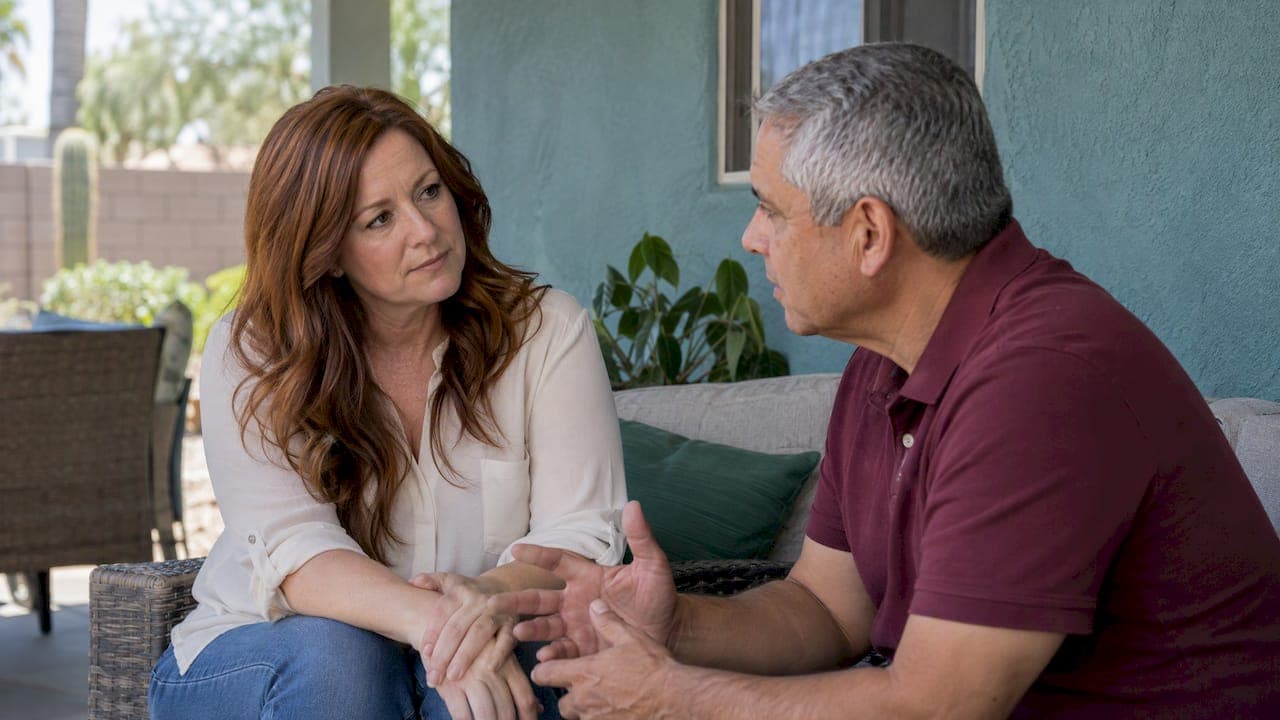
Yes, trust can be rebuilt after an affair, but it is rebuilt slowly, and it rests on the unfaithful spouse's changed behavior over time, not on promises. If you are reading this in the first raw days or weeks, we are sorry for the pain you are carrying. "The Lord is close to the brokenhearted" (Psalm 34:18), and you do not have to sort this out alone or all at once.
Below, we walk through what Christian teaching and clinical research say about forgiveness, accountability, boundaries, and healing, and what each spouse can do next.
TL;DR
- Forgiveness, reconciliation, and trust are three separate processes. You can begin one without having finished the others.
- The spouse who broke trust rebuilds it through sustained, observable actions: ending the affair, honesty without excuses, and patience with the other's pain.
- Clear boundaries around contact, phones, and transparency give the betrayed spouse something solid to lean on while trust returns.
- Prayer and Scripture bring comfort, and a counselor experienced in affair recovery adds structure for the hardest conversations.
- Research suggests couples who work through infidelity in therapy can improve a great deal, even when they begin more distressed.
Table of Contents
- Why trust feels impossible right now
- Forgiveness, reconciliation, and trust are not the same thing
- What the unfaithful spouse can do
- Boundaries and transparency that make trust possible
- For the betrayed spouse: healing in body, heart, and faith
- How prayer, Scripture, and Christian counseling work together
- Perspective: what we see in the counseling room
- When to seek help, and when safety comes first
- A realistic picture of the road ahead
- Getting support in Phoenix
- Frequently asked questions
- Sources
Why trust feels impossible right now
An affair is not only a broken rule. For many betrayed spouses it is closer to an injury. The American Association for Marriage and Family Therapy describes infidelity as an attachment injury, and says the way forward has to move a couple toward interactions that feel safer, softer, and more emotionally responsive.
That helps explain why reassurance alone rarely lands. The person you counted on most became the source of the wound. It is normal to feel anger one hour, numbness the next, and a longing to be held the next. Grief is not linear and often moves in cycles, and so does recovery from betrayal.
There is real reason for hope. A 2010 study in the Journal of Family Psychology compared 145 couples reporting infidelity with 385 couples seeking therapy for other reasons. The infidelity couples started out more distressed, yet they kept improving through therapy and a six-month follow-up, and at follow-up they were not statistically distinguishable from the comparison couples.
Forgiveness, reconciliation, and trust are not the same thing
Many Christian couples feel pressure to "forgive and move on," as if one decision settled everything. Scripture does call us to forgive: "Be kind and compassionate to one another, forgiving each other, just as in Christ God forgave you" (Ephesians 4:32). But forgiveness is only one piece.
Focus on the Family's guide to recovering from an affair treats forgiveness, reconciliation, and restoration as distinct, long-term processes. Forgiveness involves giving up revenge, while reconciliation means rebuilding and repairing a broken relationship. Forgiveness is also a process, and it does not mean you instantly forget the devastation.
The American Association of Christian Counselors makes a related point: forgiveness can occur without restored trust, while reconciliation calls for genuine repentance and sincere repair efforts from the person who broke the trust.
Here is how the three differ in everyday life:
| Forgiveness | Reconciliation | Trust | |
|---|---|---|---|
| Whose work? | Mainly the hurt spouse, with God's help | Both spouses | Mainly earned by the spouse who broke it |
| What it looks like | Releasing the right to revenge | Repairing the relationship together | Reliability seen again and again |
| How long | A process, often with setbacks | Potentially a long season | Built over time through consistent behavior |
Focus on the Family also notes that biblical forgiveness does not mean condoning, forgetting, minimizing, or immediately trusting. If you want to go deeper on this distinction, our article on forgiveness versus reconciliation lays it out gently, and biblical, trauma-aware forgiveness after infidelity speaks to the specific road after an affair.
What the unfaithful spouse can do
If you are the one who broke the covenant, the most useful thing you can hear is that trust is not restored by how sorry you feel. It is restored by what you do, consistently, for a long time. Drawing on Psychology Today's guidance on taking full responsibility for an affair, these are the core steps:
- End the affair and all contact with the affair partner. This comes first, and it has to be complete.
- Take full responsibility without excuses. No blaming your spouse, your stress, or the state of the marriage.
- Examine why it happened. Look honestly at the factors in you, and plan for the triggers that could return.
- Listen when your spouse needs to talk. You may hear the same questions many times. Answer them patiently.
- Tolerate changing emotions. Anger, sadness, and withdrawal can all appear in the same day.
- Accept transparency. More on this below.
- Show change through sustained action. Words open the door. Months of reliability walk through it.
A genuine apology matters too. A 2025 Psychology Today guide says it should take responsibility without justification or blame-shifting, acknowledge the harm done, explain why the affair occurred, and make room for the betrayed partner's anger, sadness, and conflicting emotions.
One caution from a Christian perspective: do not ask for forgiveness on a schedule. Focus on the Family encourages the unfaithful spouse to seek forgiveness by understanding the other's experience and asking humbly, while accepting that forgiveness cannot be demanded or expected on a particular timetable.
Boundaries and transparency that make trust possible
Trust grows where there is safety, and safety comes from clear, agreed-upon limits. Research summarized by Psychology Today points to cutting off contact with the affair partner, regularly checking in about feelings and needs, and demonstrating accountability through actions, noting that trust requires consistent behavior over time.
In practice, couples often agree on things like:
- Permanent, documented ending of contact with the affair partner, including social media and messaging.
- Openness about phones, messages, and online activity for a season, so the hurt spouse is not left guessing.
- Sharing schedules and whereabouts when asked, without defensiveness.
- A weekly check-in, set at a calm time, to talk about how each of you is doing.
- Temporary limits on situations that make reassurance harder, such as late-night travel with a coworker.
AAMFT notes that therapists can help couples create new rules, roles, boundaries, and technology practices, including clearer limits around phones and online activity. These are not punishments. They are scaffolding, and most couples loosen them gradually as reliability is shown.
Sometimes an affair leaves practical questions that feed the doubt, such as whether a pregnancy or a child's parentage is in question. Some couples look into home DNA testing for clarity so that a specific fear does not keep fueling every conversation. Whether that is right for you is a decision to make prayerfully, ideally with a counselor beside you.
For the betrayed spouse: healing in body, heart, and faith
If you are the one who was betrayed, your reactions are not overreactions. You may replay details, startle at a phone buzz, or feel far from God. None of that means your faith has failed.
Focus on the Family notes that forgiveness and healing influence each other but are distinct journeys. Pain and fear can stay triggered and may need continuing care, and God can provide strength to forgive. You may forgive and still need healing, and you may need healing before forgiveness feels possible.
There is also evidence that forgiveness matters for growth. In a study of people who stayed in their relationships after infidelity, differentiation of self was related to forgiveness, and forgiveness was the only significant predictor of posttraumatic growth. That does not make forgiveness quick or easy. It suggests the slow work of letting go can bring something good out of something terrible.
A few things that often help:
- Name what you feel before God. The Psalms give us permission to bring grief, anger, and fear honestly: "Pour out your hearts to him, for God is our refuge" (Psalm 62:8).
- Do not rush yourself. Reconciliation is not simply going back to how things were. It is a potentially long process of rebuilding the relationship from the ground up.
- Choose a few safe people. A trusted friend, a pastor, or a professional counselor can carry part of the weight.
- Tend to your body. Sleep, food, and movement are not luxuries after betrayal.
How prayer, Scripture, and Christian counseling work together
Prayer and Scripture can help you name grief, anger, confusion, and fear before God and ask for discernment and hope. Christian counseling adds structure for communication, accountability, root causes, overwhelming emotions, forgiveness, and decisions about rebuilding. Focus on the Family recommends marriage counseling with a licensed Christian counselor who is experienced in marital therapy and affair recovery.

A Christian counseling guide on facing painful seasons encourages bringing emotions honestly to God through prayer and personalized Scripture, and turning to trusted friends, a church leader, or a professional counselor. It presents prayer as a way to draw near to God, and not a replacement for professional counseling.
On the clinical side, AAMFT lists cognitive-behavioral, forgiveness-based, emotion-focused, attachment-based, and solution-focused approaches as relevant frameworks for affair recovery. A good counselor draws on these while honoring the faith that anchors your marriage. Our overview of Christian couples counseling explains what that blend looks like, and if talking is hard right now, three steps for Christian marriage communication can help you get started at home.
Perspective: what we see in the counseling room
We have sat with many Christian couples in the first hours after a discovery, and the most common thing we hear is, "I don't know if I can ever believe him or her again." We never ask anyone to hurry past that sentence. It is honest, and honesty is where healing begins.
Here is what we have come to believe after more than 14 years of walking with couples and individuals in the Phoenix area. Faith is not a shortcut around the work of rebuilding trust, but it is a source of strength for doing it. When a couple can pray, name the wound plainly, and let Scripture hold their grief, they are often more willing to stay in the hard conversations.
We also believe each person's spiritual beliefs should guide the counseling, not be pushed aside by it. That is why we integrate faith with emotional support, and why we keep our practice small and private-pay: it means your story stays confidential, and we can often offer openings within days, when waiting weeks feels unbearable.
If you are the betrayed spouse, you may need individual space to grieve before any joint work. If you are the one who broke trust, you may need someone to help you face the "why" without sinking into shame. Both needs are real, and both can be met.
Tres
When to seek help, and when safety comes first
If you are unsure when to bring in a counselor, sooner is usually kinder. AAMFT's Family Therapy publication reports that couples who disclose an affair before or during therapy can improve as much as or more than couples without infidelity, while couples who keep the affair secret may remain unchanged or get worse. Secrets keep the wound open.
Consider reaching out when:
- You cannot stop replaying the discovery, or you are not sleeping or eating well.
- Your conversations keep ending in the same argument or in silence.
- You are unsure whether to stay, separate, or wait.
- The unfaithful spouse wants to repent and does not know how.
Sometimes the home is not safe. Focus on the Family's guide to a healing separation says a structured separation may help when the home is volatile or unsafe, when abuse or addiction is present, or when a couple is recovering from an affair, and it recommends both individual counseling and couples therapy during that time. If you fear for your physical safety, contact local emergency services or the National Domestic Violence Hotline, and work with a professional counselor on a safety plan before any joint sessions.
If an affair has also left you with trauma symptoms, individual work may come first. We offer EMDR as one option for trauma, alongside faith-based counseling for individuals.
A realistic picture of the road ahead
No one can promise you a timeline, and we would be wary of anyone who did. What couples tend to describe is a pattern like this:
- Crisis. The affair is disclosed or discovered, and emotions are at their most intense.
- Stabilizing. The affair ends, boundaries are set, and basic safety returns.
- Understanding. Both spouses explore what led to the affair and what needs to change.
- Rebuilding. New habits of honesty, intimacy, and prayer take root. Our pieces on faith and intimacy for Christian couples and a biblical path to marriage intimacy can support this stage.
- Deciding. Each of you decides, with prayer and wise counsel, what a renewed marriage looks like, or whether it can continue.
Setbacks are part of it. A bad week does not erase months of progress. As Galatians 6:9 puts it, "Let us not become weary in doing good, for at the proper time we will reap a harvest if we do not give up."
Getting support in Phoenix
At Prism Counseling & Coaching, we offer Christian and faith-based counseling for individuals and couples counseling in the Phoenix area. Our private-pay model means no insurance paperwork and no diagnosis on a claim, and we often have openings within days.
A standard 50-minute session is $195, and sliding scale appointments are available at $100 to $165. You can see all details on our rates page.
Whether you come alone or together, you can start here, and we will help you take the next step at your own pace.
Frequently asked questions
Can a marriage really recover after an affair?
Many do. The 2010 study of 145 couples reporting infidelity found they began more distressed but kept improving in therapy, and at six-month follow-up they were not statistically distinguishable from other couples in therapy. Recovery depends on honesty, repentance, and consistent change from the spouse who broke trust, and on both people being willing to do the work.
Does forgiving my spouse mean I have to trust them again?
No. Forgiveness and trust are different. Forgiveness means releasing the right to revenge, while trust is rebuilt as your spouse shows reliability over time. You can forgive and still keep boundaries while that trust returns.
How long does it take to rebuild trust?
There is no fixed timeline, and forgiveness cannot be demanded on a schedule. Reconciliation can be a long process, and pain may be triggered again along the way. Steady, observable change from the unfaithful spouse is what moves it forward.
Should we see a Christian counselor or a secular therapist?
That depends on what matters to you. If your faith is central to how you grieve and decide, a licensed Christian counselor experienced in affair recovery can address both the emotional and spiritual layers. Whichever you choose, look for someone with real experience in infidelity.
What if only one of us wants counseling?
The spouse who wants help can still begin individually. Individual counseling can give you space to process grief or guilt and decide your next steps, and it often makes later joint sessions more fruitful.
Sources
- Recovering From an Affair, Focus on the Family
- Restoring Trust in Marriage, Focus on the Family
- Forgiveness and Marital Distress, Focus on the Family
- Why and How to Pursue a Healing Separation, Focus on the Family
- Outcomes of couples with infidelity in a community-based sample, Journal of Family Psychology (2010)
- Recovery from infidelity: Differentiation of self, trauma, forgiveness, and posttraumatic growth (2014)
- AAMFT Family Therapy, November-December 2017
- AAMFT Family Therapy, March-April 2008
- Rebuilding Broken Trust, American Association of Christian Counselors
- How to Take Full Responsibility for an Affair, Psychology Today
- So, You Cheated On Your Partner: Now What?, Psychology Today
- Unwanted Journey guide
- Why Couples Use Home DNA Kits for Clarity