
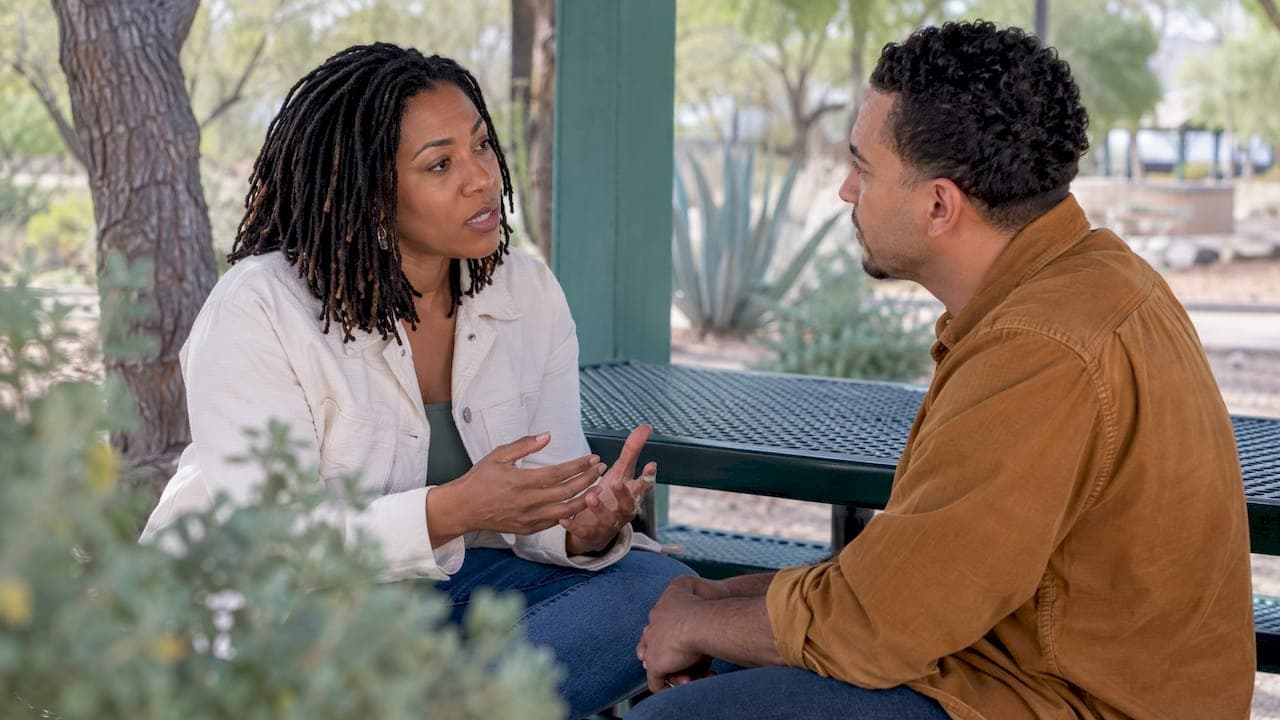
A premarital red flag is a persistent pattern, not a single bad day: dishonesty, control, pressure, disrespect, mismatched faith or values, or an untreated addiction or mental health struggle that your partner will not face. If you are seeing one, you are not being faithless or judgmental. You are paying attention, and that is wise. We walk with many couples and individuals in Phoenix through this exact question, and we want to help you sort what is serious from what is simply growth still to come.
TL;DR
- Red flags are repeated patterns (dishonesty, control, jealousy, pressure, contempt, unwillingness to change), not isolated incidents.
- Differences in faith, values, money and calling matter more than differences in taste or personality.
- Healthy couples can disagree and still treat each other with dignity. Fear, intimidation and coercion are not ordinary conflict.
- If you feel unsafe, safety comes before pastoral or couples counseling. Call 911 in an emergency or the National Domestic Violence Hotline to talk it through.
- Most other concerns are worth naming early, with a pastor or a counselor beside you, before the wedding rather than after.
Table of Contents
- Why it is wise to look hard before the wedding
- Red flag or growth area? How to tell the difference
- Character red flags: honesty, control and respect
- Faith and values red flags
- Physical intimacy and false compatibility
- Communication red flags that matter
- When it is not conflict: signs of abuse
- What to do when you notice a red flag
- Perspective: what we see in our office
- How premarital counseling helps you see clearly
- Talk with a counselor who shares your faith
- FAQ
- Sources
Why it is wise to look hard before the wedding
Engagement is a hopeful season, and nobody wants to be the person who spoils it. Yet Scripture treats clear sight as a form of care: "The prudent see danger and take refuge, but the simple keep going and pay the penalty" (Proverbs 22:3).
Many people tell us they noticed something months before the engagement and set it aside. They hoped love, prayer or the wedding itself would change it. Sometimes the concern turned out to be a growth area. Other times it was a pattern that only grew heavier after the vows.
Naming a worry is not the same as ending a relationship. It is the first step in finding out which kind of concern you are facing.
Red flag or growth area? How to tell the difference
This is the question underneath every search for "red flags." Every couple has friction, so the useful question is what kind of friction it is.
The Gottman Institute describes red flags as persistent patterns rather than isolated incidents, marked by unwillingness to acknowledge the impact of one's behavior, escalation, or making a partner feel unsafe, disrespected or consistently anxious. Growth areas, by contrast, can improve with awareness, effort and sometimes professional guidance.
Here are four questions we ask people to consider:
- Is it a pattern? Has it happened many times, in different settings, or only once during a stressful week?
- Does your partner see it? Can they hear how it affects you without defensiveness, minimizing or blame?
- Is anything changing? Do they apologize in a way that leads to different behavior, or does the cycle simply repeat?
- How do you feel around them? Are you more yourself, or are you shrinking, editing and bracing?
The University of Wyoming's guidance on conflict helps here. It describes conflicts over core values, a major breach of trust, or a draining unresolved issue as serious enough to threaten a marriage. Smaller disagreements can be troublesome without threatening the relationship's stability.
In practice, a couple who argues about how to load the dishwasher has a different situation from a couple where one partner lies about money and shrugs when it is discovered.
Character red flags: honesty, control and respect
The Center for Marriage and Relationships at Biola University lists dishonesty, controlling behavior or jealousy, and unresolved addiction or psychological issues among the common premarital concerns. Here is what each can look like day to day.
Dishonesty
This is more than a forgotten detail. Look for hidden debts, secret accounts or phones, a history that keeps changing, and lies that are only admitted once you find proof. Trust is the floor of a marriage. When it is cracked at the start, everything built on it feels unsteady.
Control, jealousy and isolation
Youth.gov's description of unhealthy relationships names control, jealousy and isolation as warning signs, in contrast to healthy relationships built on mutual respect, trust, honesty and individuality. In a Christian setting, control can be dressed in spiritual language: "a wife must submit," "God told me you should leave that job," "your friends are a bad influence." Notice who gets to make decisions, and whether you still have your own friendships, opinions and voice.
Disrespect and contempt
Sarcasm about your faith, mocking your family, belittling your work or calling you names are not small matters. Utah State University Extension describes healthy partners as able to disagree while treating each other with dignity, listening, stating needs and approaching problems as a team, with both people keeping a voice in major decisions.
Pressure, especially sexual pressure
Pressure of any kind, to rush the relationship, to drink or use drugs, or to be sexual, deserves your attention. Loveisrespect notes that pressure to use drugs or alcohol is a warning sign and that, if a partner keeps pushing, you should reevaluate the relationship.
A partner who uses spiritual language to overcome your "no" is manipulating you. Phrases like "if you really loved God and me" or "we're going to be married anyway" are not faith. They are coercion. Your boundaries are not obstacles to the relationship. They tell you how the relationship treats you.
Unaddressed addiction or mental health struggles
Having a struggle is not a red flag. Many wonderful people live with anxiety, depression, trauma or a history of addiction. The concern is denial and refusal to seek help. Someone who is working with a counselor, a doctor or a recovery group is in a very different place from someone who insists nothing is wrong while the damage spreads.
Faith and values red flags
For Christian couples, spiritual compatibility is not a bonus feature. It shapes how you will raise children, spend money, use Sundays, forgive each other and face grief.
Crosswalk's list of premarital warning signs includes not sharing the same faith, different life callings and financial irresponsibility. The old question still applies: "Do two walk together unless they have agreed to do so?" (Amos 3:3).
Some things to look at honestly:
- Faith that is spoken but not lived. Does your partner pray, serve, repent and welcome accountability, or does faith appear mostly when it is convenient?
- Refusing pastoral input. A partner who will not talk with a pastor or counselor, or who treats every outside question as an attack, is telling you something.
- Different expectations about church, children and roles. These are fixable only if you talk about them before the wedding.
- Money habits. Spending, debt, giving and saving reveal values. Differences here can be negotiated, but secrecy cannot.
Some couples come from different traditions, or one partner's faith is newer or quieter. That is not automatically a red flag. It becomes one when the difference is hidden, dismissed or used against the other person. If this is your situation, our guide to interfaith premarital counseling can help you ask the right questions.
Physical intimacy and false compatibility
This is a tender subject, and we want to approach it without shame. The Biola center notes that premarital sexual intimacy can create a false sense of compatibility and obscure warning signs. Physical closeness releases strong bonding feelings, and those feelings can make it harder to see character clearly. People often stay longer than they should because they feel attached, not because the relationship is sound.
If you have crossed lines you hoped not to, you are not beyond grace, and you are not stuck. It may help to slow the physical side and put more weight on conversation, time with friends and family, and honest counsel. The Lord "is close to the brokenhearted" (Psalm 34:18), and that includes the heartbreak of realizing a relationship is not what you hoped.
The Hotline also names pressure to be sexual to prove love, devotion or submission as a red flag for sexual coercion. Consent has to be free. If "no" brings punishment, guilt or anger, that is a serious concern, whatever your beliefs.

Communication red flags that matter
No couple communicates perfectly. The Healthy Relationships Initiative describes healthy conflict as respectful interaction, with the ability to reset through a sincere apology or a calming break. It also says that if the other person is intent on being hurtful or abusive, you should end the conversation and seek help.
Watch for these patterns:
- Stonewalling or silent treatment used to punish you
- Bringing up old wounds in every argument
- Never apologizing, or apologizing only to end the discussion
- Turning your concern into your fault, every time
- Avoiding serious topics such as children, money, boundaries with in-laws or past relationships
The last one is easy to miss. If every serious conversation gets deferred until after the wedding, ask what exactly is being postponed.
When it is not conflict: signs of abuse
This section matters most. Some red flags are not communication problems and cannot be solved by better listening, a pastor's mediation or a couples workshop.
Utah State University Extension is clear that threats, intimidation, property destruction, blocking someone from leaving, humiliation, deliberately frightening you, and controlling silent treatment are not merely poor communication. The person being treated this way is not responsible for communicating better to stop it.
Cleveland Clinic describes domestic violence as a repeated pattern intended to gain power and control. Warning signs can include controlling money or employment, name-calling, sexual coercion, and changing your behavior mainly to avoid your partner's anger.
If any of this sounds familiar:
- If you are in immediate danger, call 911.
- If you are worried about warning signs, The Hotline invites you to call and talk through what is happening.
- Tell someone you trust, such as a friend, family member or a pastor who takes safety seriously.
- Do not bring your partner into a joint session to "work on it" until you have a safety plan and professional guidance. Joint counseling can put the person who is being harmed at greater risk.
Fear is information. You do not need to prove it to anyone before you act on it.
What to do when you notice a red flag
The U.S. military's Human Performance Resources guidance offers a practical path: clarify your motivations, consider your options, communicate to uncover misunderstandings or patterns, and decide whether the relationship remains worthwhile. It also suggests speaking with a chaplain or a mental health provider. Here is how we would adapt that for a Christian couple.
- Write it down. Describe what happened, how often, and how you felt. A pattern is easier to see on paper than in your head.
- Pray and be honest with yourself. Ask whether you are naming a real pattern or hoping a wedding will change someone.
- Talk to your partner once, calmly and clearly. Describe the behavior and its effect, then notice the response. Defensiveness, denial or anger tells you one thing. Curiosity and ownership tell you another.
- Ask for outside help. A pastor, a mentor couple or a counselor can see what you cannot. Pay attention to whether your partner welcomes this or resists it.
- Slow down. You can postpone a date, pause the engagement or take space. Wedding deposits matter far less than a lifetime.
- Decide with your whole self. Mind, heart, conscience and trusted counsel should point in a similar direction.
More pastoral voices say something similar: if someone refuses guidance, causes emotional harm or remains unstable, pausing or walking away may be the wise choice. Walking away from a harmful pattern is not a failure of faith.
Perspective: what we see in our office
We have sat with many couples in the months before a wedding, and with many individuals in the months after a relationship ended. The pattern is consistent. Almost no one says, "I wish I had ignored it longer." Most say, "I wish I had asked for help sooner."
We believe faith and good counseling belong together. Prayer does not replace honest conversation, and counseling does not replace prayer. Your beliefs should guide the work, not be set aside for it. When a couple brings their faith into the room, we can ask questions such as whether you share a vision for your home, how each of you handles forgiveness, and whether you are both willing to be corrected.
We also want to say clearly that a red flag is not a verdict on a person's worth. Many people carry old wounds, family patterns or unprocessed trauma into dating. When someone is willing to look at that, to be humble and to do the work, real change is possible. When someone is not, you are allowed to protect yourself.
Because we are a small, private-pay practice, we can often offer openings within days. That matters when a decision is pressing and you do not want to wait weeks to talk with someone.
Tres
How premarital counseling helps you see clearly
Premarital counseling is not a test you pass or fail. It gives you a structured, safe place to talk about what couples often avoid: family history, money, intimacy, roles, conflict and faith. It can reveal strengths you can build on, and it can surface concerns while there is still time to address them.
If you want to prepare, our article on premarital counseling questions to ask before you marry gives you a place to start. For a fuller picture of what the process involves, see our complete faith-based guide to Christian premarital counseling. If you are already weighing whether to seek help together, signs couples need professional counseling may be useful.
A good counselor will also respect your pace. If your concern is about safety, a good counselor will ask to speak with you individually first.
Talk with a counselor who shares your faith
If you are carrying a worry about your relationship, you do not have to carry it alone. At Prism Counseling & Coaching, we offer couples counseling and individual counseling in the Phoenix area, with your spiritual beliefs guiding the work. You can meet with us on your own to sort out what you are seeing, or together as a couple.
Our standard 50-minute session is $195, and our sliding scale appointments range from $100 to $165. You can see everything on our rates page. We are private-pay and do not bill insurance, which keeps your sessions confidential and often lets us offer a first appointment within days. When you are ready, you can start here.
FAQ
Is it a red flag if my fiancé or girlfriend does not want premarital counseling?
Not always, because some people simply feel nervous or unsure what it involves. It becomes a concern when the refusal comes with defensiveness about any outside input, or when your partner will not discuss the reasons. Start by asking what worries them, and consider meeting with a counselor alone if they still will not come.
Is a difference in faith always a deal breaker?
No, but it deserves a thorough conversation before marriage. Differences in belief, values and calling are listed among common premarital concerns, and they affect parenting, money and daily rhythms. Some couples work through them well with honest talk and guidance, as our article on interfaith marriage counseling explains.
Should I stay if I have already been physically intimate with my partner?
Being intimate does not mean you must stay, and it does not make you unworthy of grace. Physical bonding can make warning signs harder to see, so consider slowing down and gathering honest outside counsel. If you were pressured or hurt, tell someone you trust and reach out to The Hotline.
How do I know if I am overreacting?
Look for patterns, not moments. Ask whether it has happened repeatedly, whether your partner takes responsibility, and whether you feel safe and free to be yourself. If you are unsure, a counselor can help you sort your reactions from what is actually happening.
What if I think my partner is abusive but we are already engaged?
Your safety comes first, and an engagement does not obligate you to stay. Call 911 if you are in danger, or contact The Hotline to talk through a safety plan. Avoid joint counseling until you have safety support in place.
Sources
- Relationship Red Flags, Center for Marriage and Relationships, Biola University
- 10 Warning Signs that Mean You're Not Meant to Say 'I Do', Crosswalk
- Characteristics of Healthy & Unhealthy Relationships, Youth.gov
- Healthy BDSM Relationships Are Possible, The Hotline
- When your partner pressures you to do drugs, Loveisrespect
- Red Flags vs Growth Areas, The Gottman Institute
- What Does Healthy Love Look Like? Utah State University Extension
- Managing Conflict in Close Relationships, Healthy Relationships Initiative
- Intimacy Means Conflict, University of Wyoming
- Know the Red Flags of Abuse, The Hotline
- How To Spot Relationship Red Flags, Cleveland Clinic
- What do I do if I spot red flags or deal breakers? HPRC