
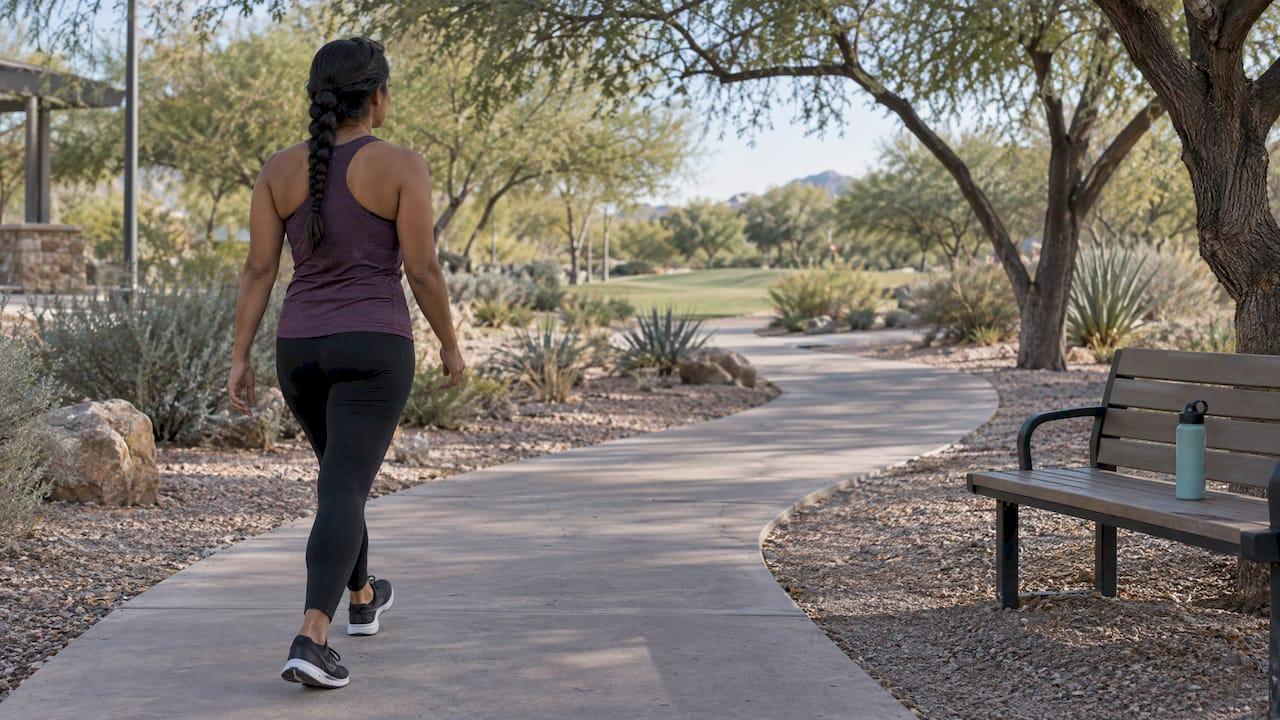
The faith and fitness habits that last are small, repeatable and tied to something you already do: a prayer, a walk, a friend. You do not need a perfect plan. You need a few minutes of movement, a reason that runs deeper than appearance, and people who walk alongside you. Many of the people we sit with at Prism Counseling & Coaching tell us the same thing: the struggle is rarely knowledge. It is weariness, anxiety, grief or shame that makes starting feel impossible. If that sounds familiar, this guide is for you, and so is a gentler way to begin.
TL;DR
- Scripture treats the body as a gift to care for, not an idol to perfect. Balance is the aim.
- Adults are advised to get 150 to 300 minutes of moderate activity a week plus strength work on 2 or more days. Short sessions count.
- Even one session of movement can lift mood, ease anxiety and help sleep, which makes it a natural partner to prayer and rest.
- Attach exercise to a spiritual rhythm, add a workout buddy, and start smaller than you think you should.
- If worry, burnout or old shame keeps blocking you, counseling that respects your faith can help you move again.
Table of Contents
- What it means to join faith and fitness
- What Scripture says about caring for your body
- How much movement actually helps
- Why movement and spiritual health work together
- Habits that tie faith and fitness together
- Christian workout motivation that lasts
- When your body or your health needs a gentler start
- When something deeper is in the way
- Get support that honors your faith
- FAQ
- Sources
What it means to join faith and fitness
For a Christian, fitness is not a separate project from faith. It is one small way of living out what you already believe about your life and your body.
The Daniel Plan, a well-known church-based health program, frames this with five essentials: Faith, Food, Fitness, Focus and Friends. Its Leaders Guide describes the body as a gift from God (pointing to 1 Corinthians 6:19-20), encourages exercise you will actually enjoy, and says God energizes lifestyle change (pointing to Philippians 4:13). It also says every body needs a buddy, drawing on Ecclesiastes 4:9.
Notice what is missing: punishment, comparison and a number on a scale. The invitation is to care for what you were given, with help, at a pace you can keep.
What Scripture says about caring for your body
Three passages come up again and again.
- 1 Timothy 4:8. Paul says bodily training has "some value" while godliness is valuable in every way. A journal article by Brian Allred reads this as protection from two errors: treating fitness as supreme, and treating it as worthless. The goal is balanced care, not appearance.
- Ephesians 5:28-29. Paul describes nourishing and cherishing one's own body. The same article draws from this that bodily care is stewardship, not vanity.
- 1 Corinthians 6:19-20. The body is a temple of the Holy Spirit, something entrusted to you.
A Nelson University essay on physical disciplines in Scripture adds a humble note. The body is limited and fragile, yet it carries the Good News, and it needs ample rest, strengthening exercise and proper food to function well. Rest is on that list too. For many weary people, the most faithful first step is sleep, not a sprint.
How much movement actually helps
The federal Physical Activity Guidelines for Americans (2018) recommend that adults get 150 to 300 minutes a week of moderate-intensity aerobic activity, or 75 to 150 minutes of vigorous activity, or an equivalent mix. They add muscle-strengthening activity on 2 or more days a week, and balance training for older adults.
That can sound like a lot. The CDC's page on what counts as physical activity makes it more manageable: you can spread 150 minutes into 30 minutes a day, five days a week. One minute of vigorous activity counts about the same as two minutes of moderate activity. Strength work should reach all the major muscle groups, at 8 to 12 repetitions per activity.

It also helps to know where most of us stand. A CDC report from April 2026, based on the 2024 National Health Interview Survey, found that 47.2% of U.S. adults met the aerobic guideline in 2024. If you have struggled to keep up, you are in very large company, and there is no shame in beginning again.
A simple weekly picture
| Habit | What it looks like | Roughly how long |
|---|---|---|
| Daily walk with prayer | Walk the block or a park, praying or listening to worship | 20 to 30 minutes, 5 days |
| Strength session | Bodyweight or light weights, major muscle groups | 20 minutes, 2 days |
| Buddy movement | A walk or class with a friend from church | 30 minutes, 1 day |
| Rest and Sabbath | A true day of lighter activity and unhurried sleep | 1 day |
This is one example drawn from the guideline ranges above, not a prescription. Adjust it to your season of life.
Why movement and spiritual health work together
Many people notice that their prayer life and their body affect each other. The research agrees with that experience in some practical ways.
The 2018 guidelines say some benefits of activity arrive right away, including reduced anxiety and blood pressure and better sleep, thinking and insulin sensitivity. The Office of Minority Health at HHS says even one session of physical activity can improve mood, reduce anxiety and help focus. The Office on Women's Health explains that aerobic exercise releases endorphins that relieve stress, that daytime activity can make it easier to sleep at night, and that regular activity has been shown to boost mood and lower symptoms of anxiety and depression.
That matters if you are carrying anxiety, grief or a heavy season. A ten-minute walk will not fix everything. It can, however, quiet the body enough that you can sit with God, or with another person, a little more freely.
Habits that tie faith and fitness together
Habits stick when they have an anchor. Try one of these for two weeks before adding another.
- Pray while you move. Walk and pray through your day, or use a verse as a breath prayer. If your mind races, Christian grounding techniques can help you come back to the present with Scripture.
- Pair a verse with a rep. Choose one short verse for the week, such as "I can do all things through him who strengthens me" (Philippians 4:13), and repeat it during the hardest part of the workout. Keep the meaning in mind: it is about God's strength in all of life, not a promise about personal records.
- Practice presence. Notice your breath and your steps instead of your pace. Christian mindfulness is a way of practicing presence with God that fits easily into a cool-down.
- Choose what you will actually do. The Daniel Plan's guide encourages enjoyable exercise. If you dread the gym, dance in your kitchen, hike, swim or garden.
- Plan for the bad day. Decide in advance what the minimum looks like: five minutes, a stretch, a prayer. Showing up small keeps the rhythm alive.
- Protect your sleep. Rest is part of stewardship, as the Nelson essay notes.
Christian workout motivation that lasts
Motivation rises and falls. What carries you through the low days is usually meaning and company.
Meaning. Ask why you want to move. "To look better" runs out quickly. "To have energy for my kids," "to serve in ministry without exhaustion," or "to honor the body God gave me" lasts longer. Allred's reading of 1 Timothy 4:8 is a good guardrail: care for the body, without letting it become the center of your life.
Community. Ecclesiastes 4:9 says two are better than one. In practice, that can be a walking partner after Sunday service, a small group that checks in on goals each week, or a spouse who trains with you. Ask for encouragement, not policing.
Prayer. Begin by asking for willingness rather than results. Many people find it easier to pray, "Lord, help me take the first ten minutes," than to pray for a transformation.
Grace. Missing a week is not failure. Begin again the next morning. Lamentations 3:22-23 reminds us that mercies are new every morning, and that applies to your Tuesday workout as well.
If you want a structured, faith-based approach to exercise, our guide to Christian fitness coaching for women explains how faith and movement can be woven together.

When your body or your health needs a gentler start
Not everyone can begin with a brisk walk. MedlinePlus advises talking with a health care provider before starting an exercise program if you have diabetes, heart or lung disease or obesity, have been inactive, or get chest pains or shortness of breath with activity. Please see your doctor first in any of those situations, and stop and seek care if you feel chest pain or unusual breathlessness.
For women adapting exercise around health conditions or long inactivity, this overview of exercise tips for women's health explains why movement matters and how to approach it safely.
When something deeper is in the way
Sometimes the barrier is not time or willpower. It is something heavier:
- Anxiety that makes your heart race and your thoughts spiral, including worry about your health. Our article on health anxiety as a Christian speaks to finding peace without shame.
- Burnout that leaves you with nothing to give. See four biblical steps for the first 72 hours of recovery.
- Stress that never lets your body settle. We have written about stress management practices backed by Scripture and science.
- Shame about your body, sometimes carried from teachings you absorbed growing up. Purity culture recovery addresses healing shame, body and faith.
If worry is the loudest voice, a few steady steps can help. This guide to mindfulness for anxiety offers practical exercises and shows how manageable first steps build consistency.
Grace for the body starts with gentleness toward yourself. You may be doing more than you give yourself credit for.
Our perspective
After more than 14 years of walking with people in the Phoenix area, we have come to believe that faith and fitness habits fail less often from a lack of discipline than from a lack of safety. A person who is anxious, grieving or exhausted cannot be shamed into a routine. They need to be heard first.
That is why we do not treat the body and the spirit as two separate problems. When a client's faith guides the work, they can bring their whole story into the room: the prayer life that feels dry, the body they have mistrusted, the fear of starting again. We can then help them choose a first step that fits who they are, whether that is a walk, a conversation with a spouse or a season of rest.
Our private-pay practice is small by design, which means openings within days and the kind of individual attention that lets these things be said out loud. We also offer fitness coaching alongside counseling, so movement and emotional care can support one another.
"Do you not know that your bodies are temples of the Holy Spirit?" (1 Corinthians 6:19). Temples are tended with care and reverence, never with contempt.
Tres
Get support that honors your faith
If you are ready to talk with someone who will treat your faith as part of the solution, we would be glad to meet you. At Prism Counseling & Coaching we offer faith-based counseling and individual counseling and coaching for adults in the Phoenix area, as well as couples counseling if building healthy habits together is part of your story. Because we are private-pay, we can often offer an appointment within days.
A standard 50-minute session is $195, and sliding-scale appointments run $100 to $165. You can see details on our rates page and our sliding scale page.
If you would like to explore your strengths and how you stay motivated, our Christian DISC personality assessment is also available through our life coaching services.
FAQ
What does God say about physical fitness?
Scripture values the body and puts it in perspective. In 1 Timothy 4:8, Paul says bodily training has some value, while godliness is valuable in every way. Ephesians 5:28-29 speaks of nourishing and cherishing the body. Together they point toward balanced care rather than obsession or neglect.
What is the 3-3-3 rule for fitness?
There is no official federal "3-3-3" fitness standard. The recognized benchmark is the Physical Activity Guidelines for Americans: 150 to 300 minutes of moderate activity a week plus strength training on 2 or more days. If you meant the 3-3-3 grounding exercise for anxiety, our article on Christian anxiety counseling with Scripture and CBT walks through it.
How do I stay motivated to work out as a Christian?
Connect movement to a reason larger than appearance, such as energy to serve your family or honoring the body God gave you. Add a buddy, since Ecclesiastes 4:9 notes that two are better than one. Pair exercise with a prayer or a verse, and start with a small minimum for hard days.
How much exercise do I need each week?
Adults are advised to get 150 to 300 minutes of moderate aerobic activity, or 75 to 150 minutes of vigorous activity, plus muscle-strengthening on 2 or more days a week. You can break that into 30-minute sessions on five days. If you have a health condition or have been inactive, see your doctor before you begin.
Can counseling help if I cannot stay consistent with healthy habits?
Yes. Anxiety, depression, burnout, grief and shame often sit beneath stalled habits. Counseling that includes your faith lets you address them without setting your beliefs aside, and you can begin with a single session.
Sources
- The Daniel Plan Leaders Guide
- Brian Allred, journal article on 1 Timothy 4:8 and bodily care (MidAmerica Nazarene University, 2018)
- Physical Disciplines According to Scripture (Nelson University)
- Physical Activity Guidelines for Americans, 2018 (CDC)
- What Counts as Physical Activity for Adults (CDC)
- CDC finds nearly half of U.S. adults get recommended amount of physical activity (AHA, April 2026)
- Physical Activity and Black/African Americans (HHS Office of Minority Health)
- Steps to good mental health (Office on Women's Health)
- Physical activity (MedlinePlus Medical Encyclopedia)
- Exercise Tips for Women's Health
- Mindfulness for Anxiety: Practical Exercises